All stories
Actuarial · Risk · Agentic AI

From actuarial and risk models to intelligent modelling ecosystems

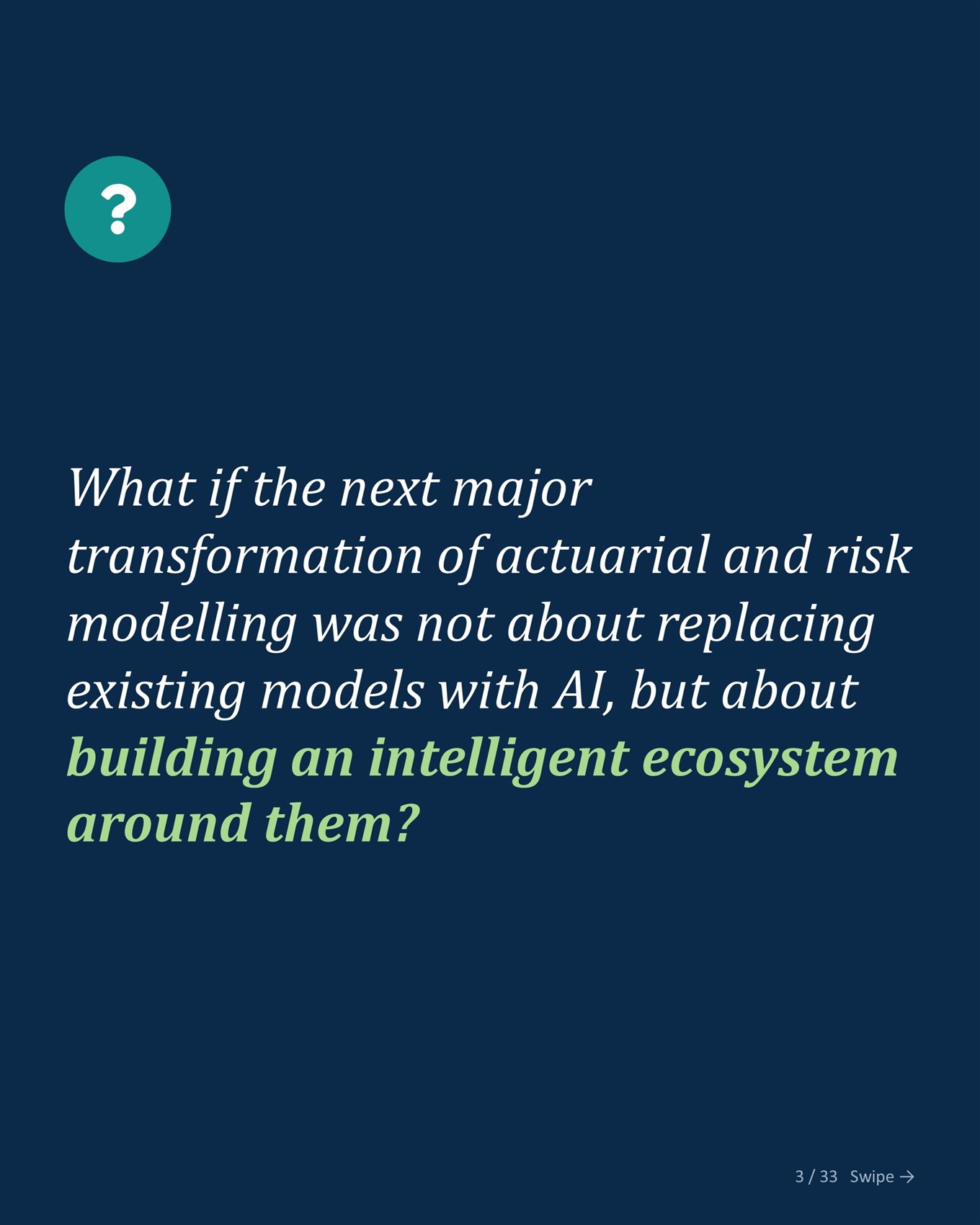
What if the next major transformation was not replacing models with AI, but building an intelligence ecosystem around them?

Previous article

Platforming Domain Context for Agentic AI

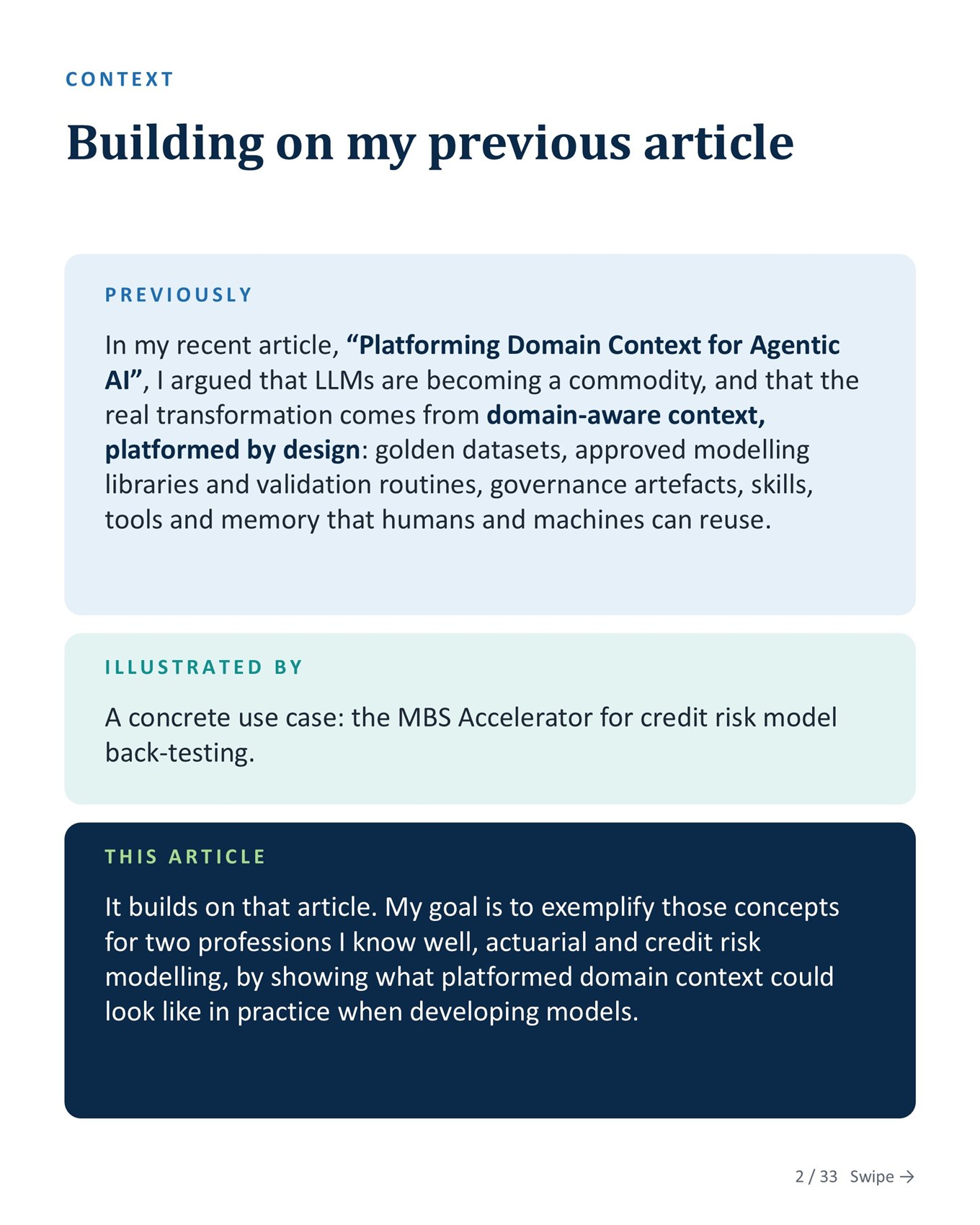
In a nutshell: LLMs are becoming a commodity. The real transformation comes from domain-aware context, platformed by design: golden datasets, approved modelling libraries and validation routines, governance artefacts, skills, tools and memory that humans and machines can reuse.
The premise

Context is the differentiator

Combine skills, trusted knowledge, approved tools and organizational memory so practitioners and AI agents can build on expertise responsibly.

A reusable context layer

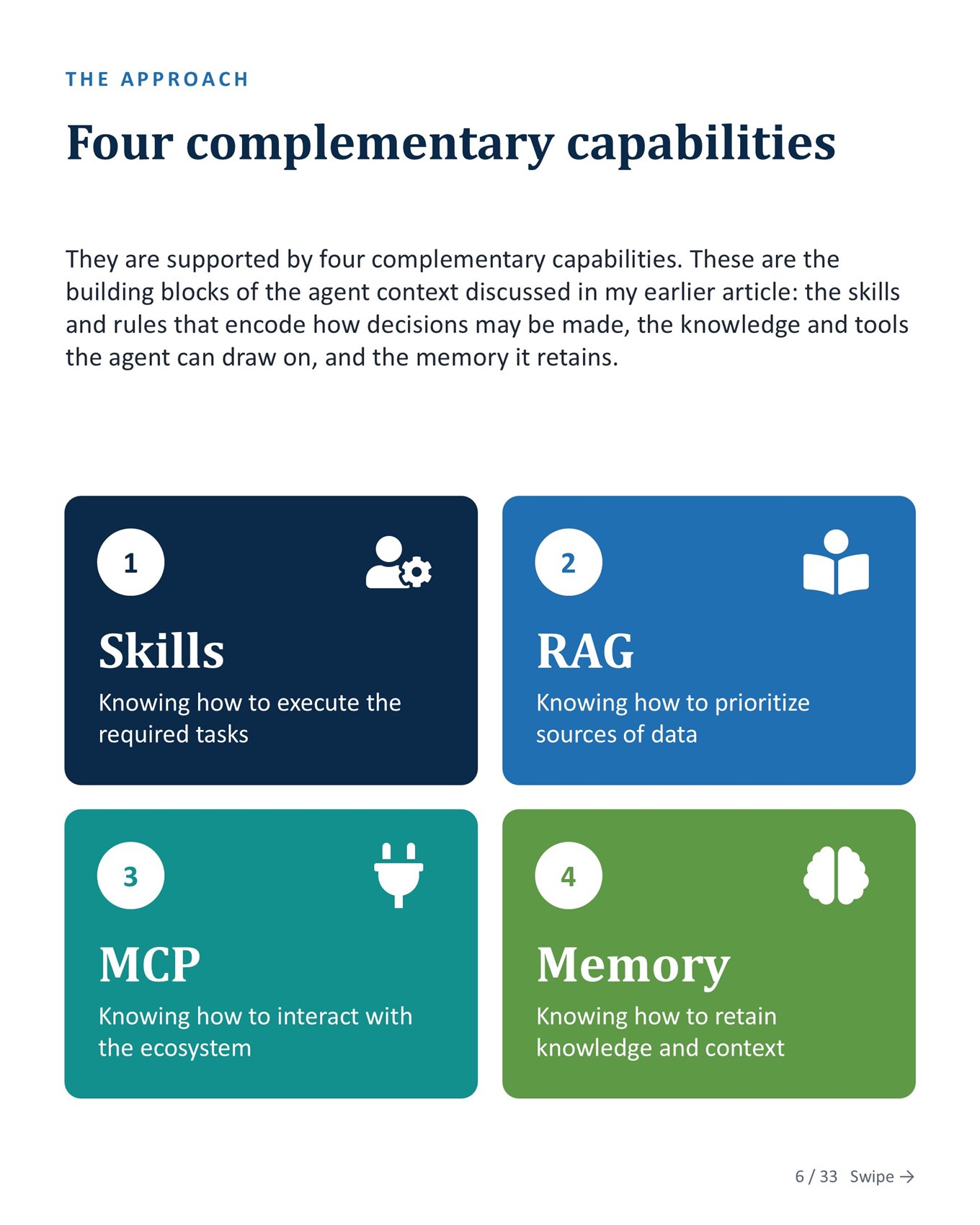
Four capabilities that make expertise scalable

Practitioners work alongside agents supported by skills and rules, curated knowledge and tools, plus governed memory. Jump into the corresponding part of the presentation.

01

Skills

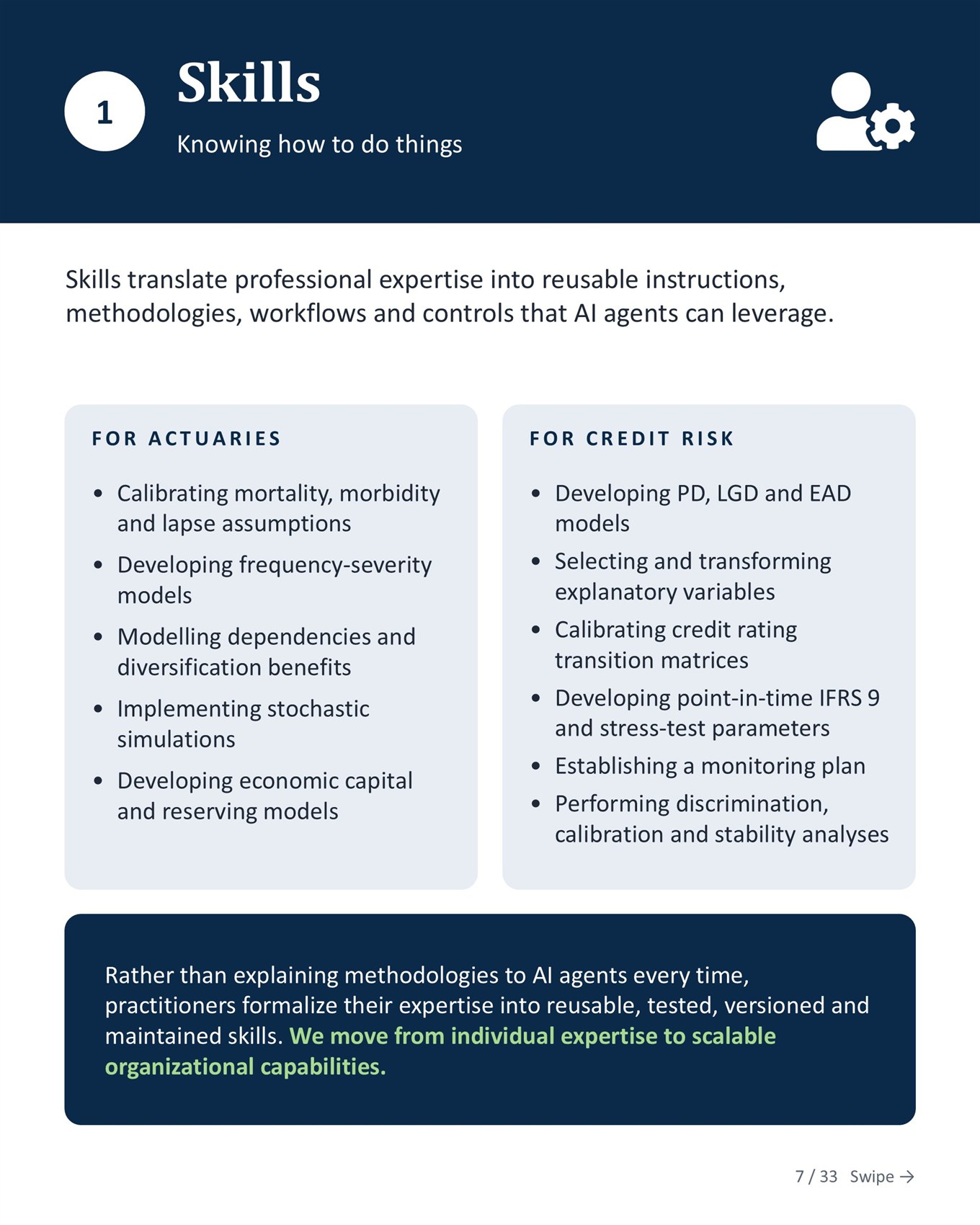
Reusable methodologies, workflows and controls that encode how work gets done.

View slide 7
02

RAG

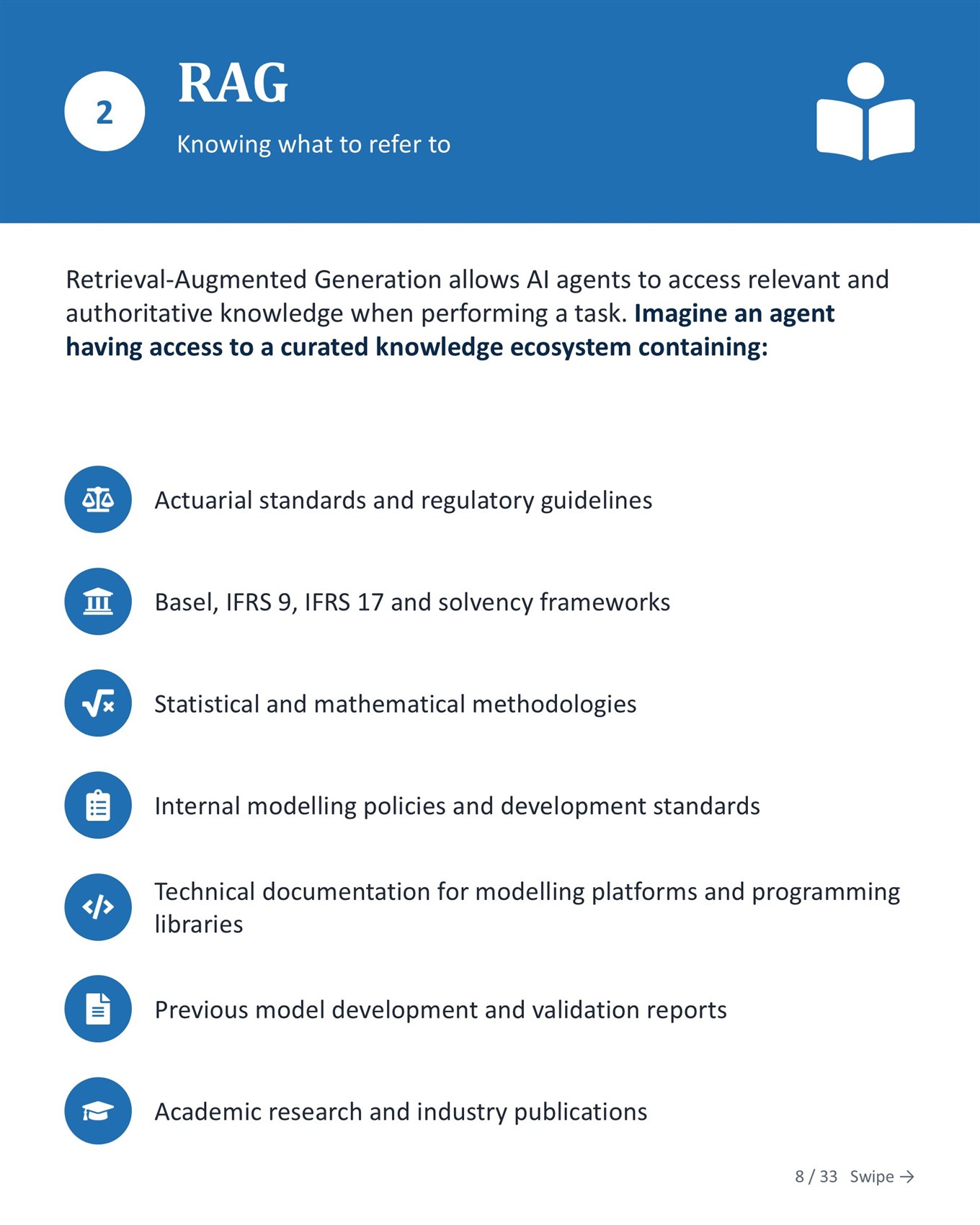
Ground model development in curated, authoritative and traceable references.

View slides 8–9
04

Memory

Preserve decisions and lessons so organizational knowledge can compound.

View slides 12–13

A guided carousel

Explore the ecosystem

01 / 33
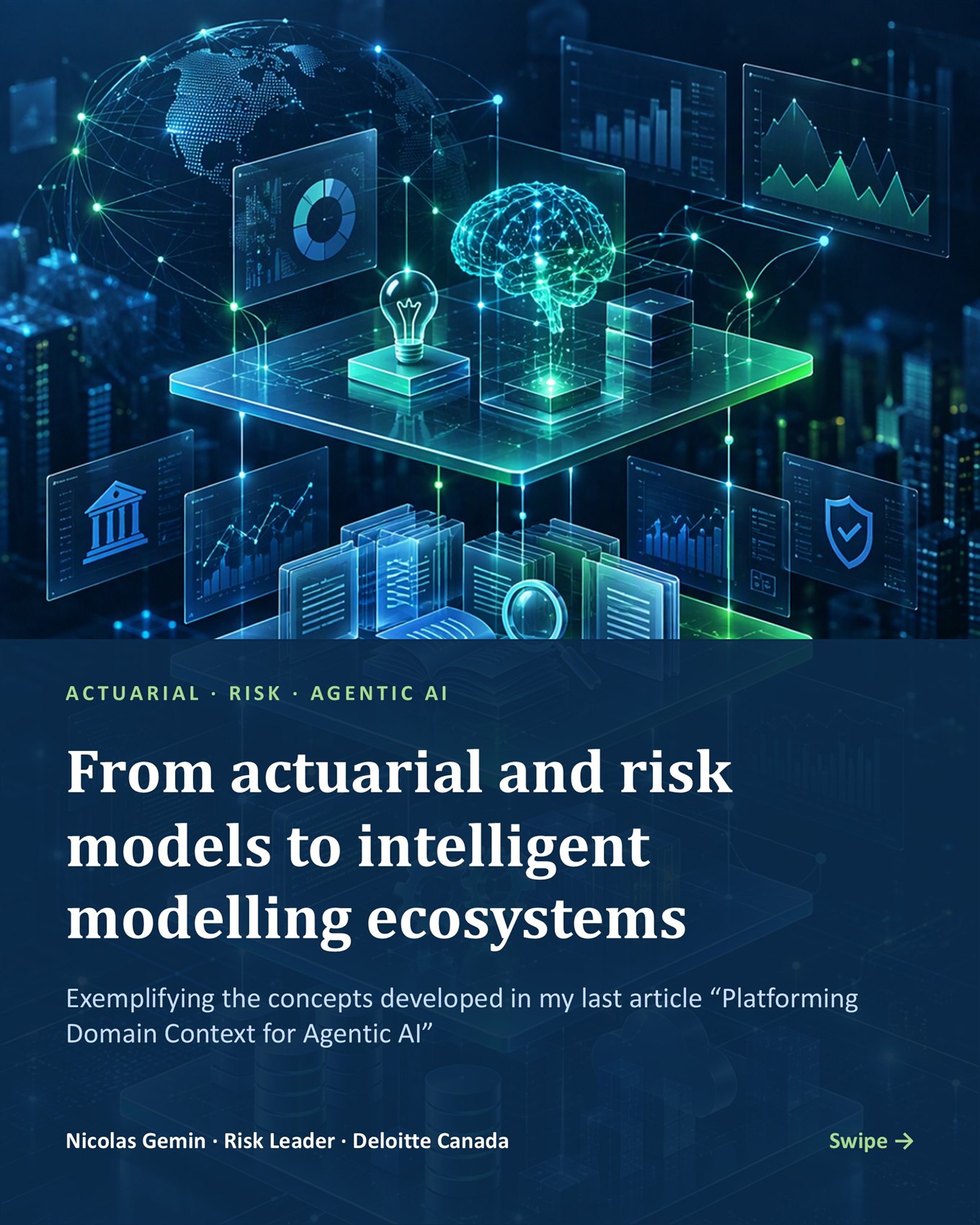
Cover: From actuarial and risk models to intelligent modelling ecosystems.
Building on the previous article about platforming domain context for agentic AI.
An intelligence ecosystem around existing actuarial and risk models.
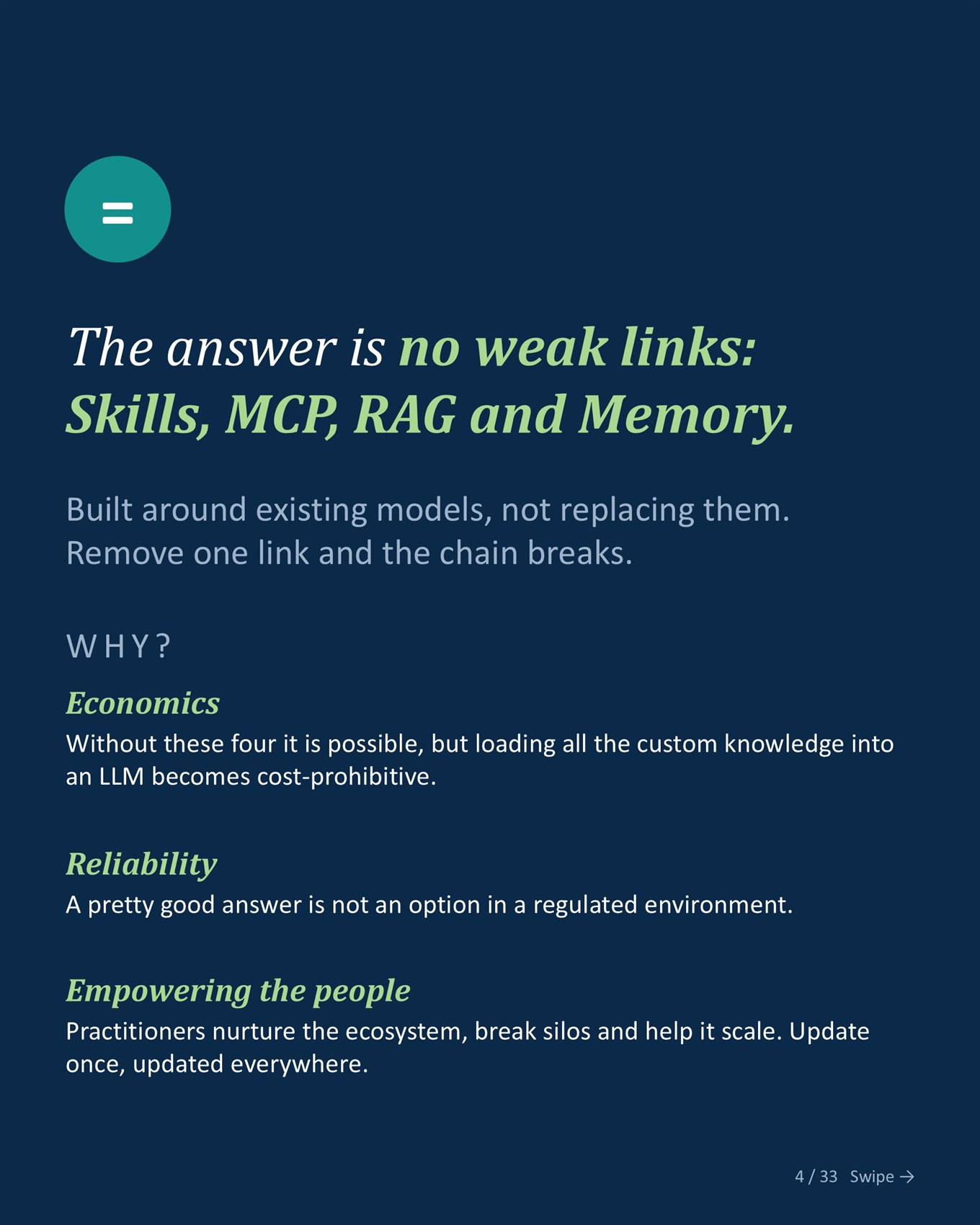
No weak links: Skills, MCP, RAG and Memory, and why all four are needed.
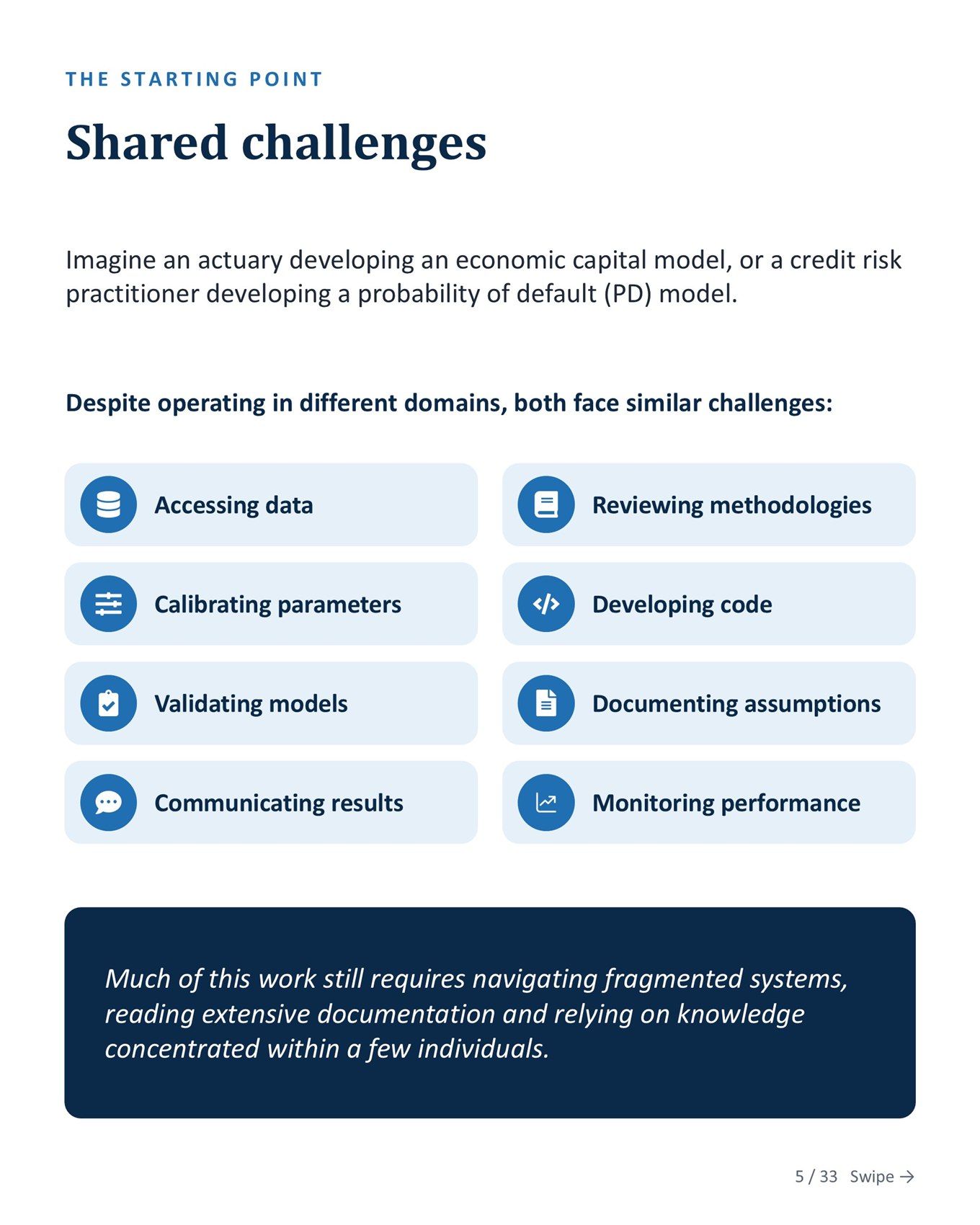
Shared challenges in actuarial and credit risk model development.
Four complementary capabilities: Skills, RAG, MCP and Memory.
Skills: reusable instructions, methodologies, workflows and controls that encode how to do things.
RAG: helping agents refer to relevant and authoritative knowledge.
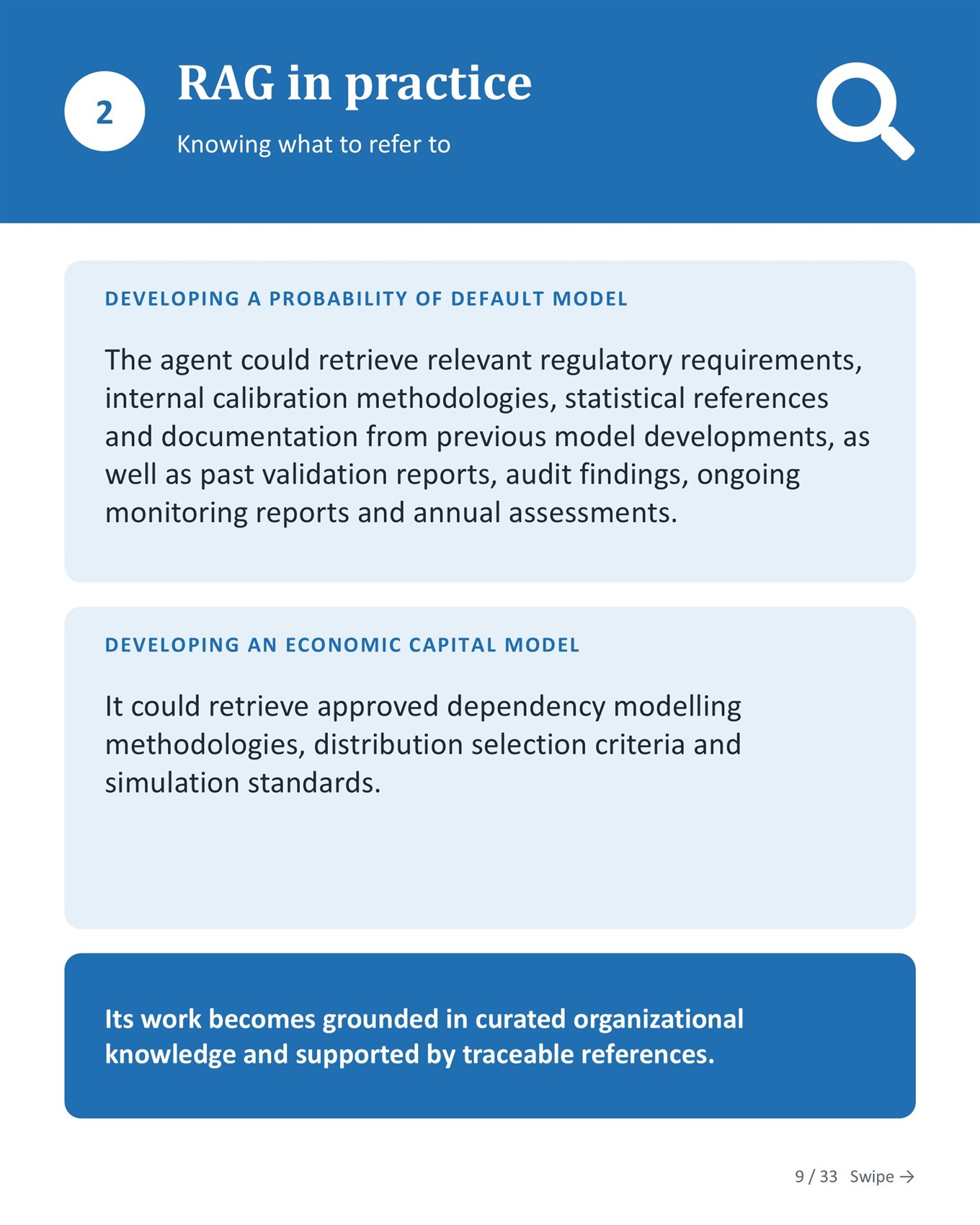
RAG in practice: developing a probability of default model using curated references.
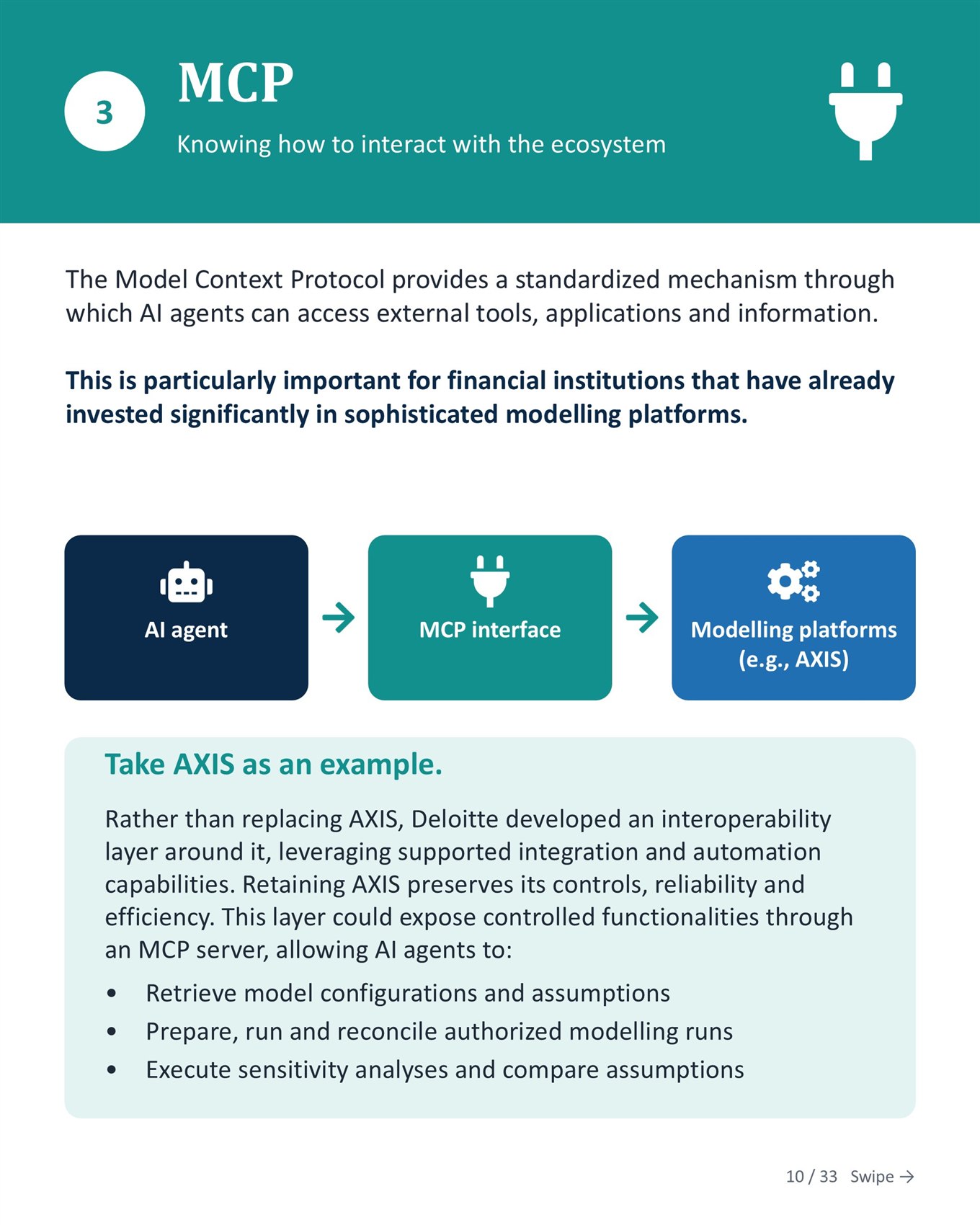
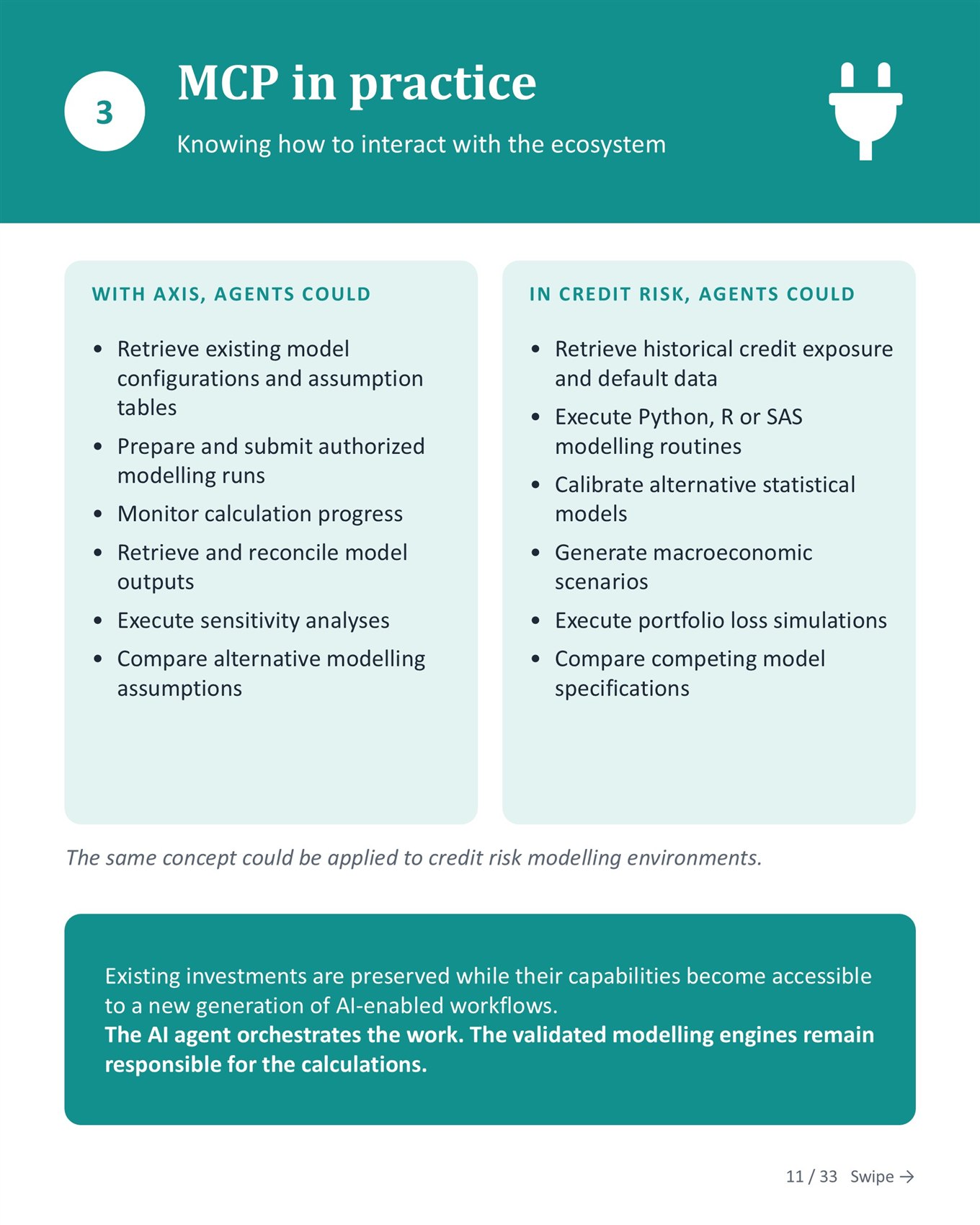
MCP: a standardized way for agents to interact with modelling tools and information.
MCP in practice: an interoperability layer lets agents use supported AXIS capabilities.
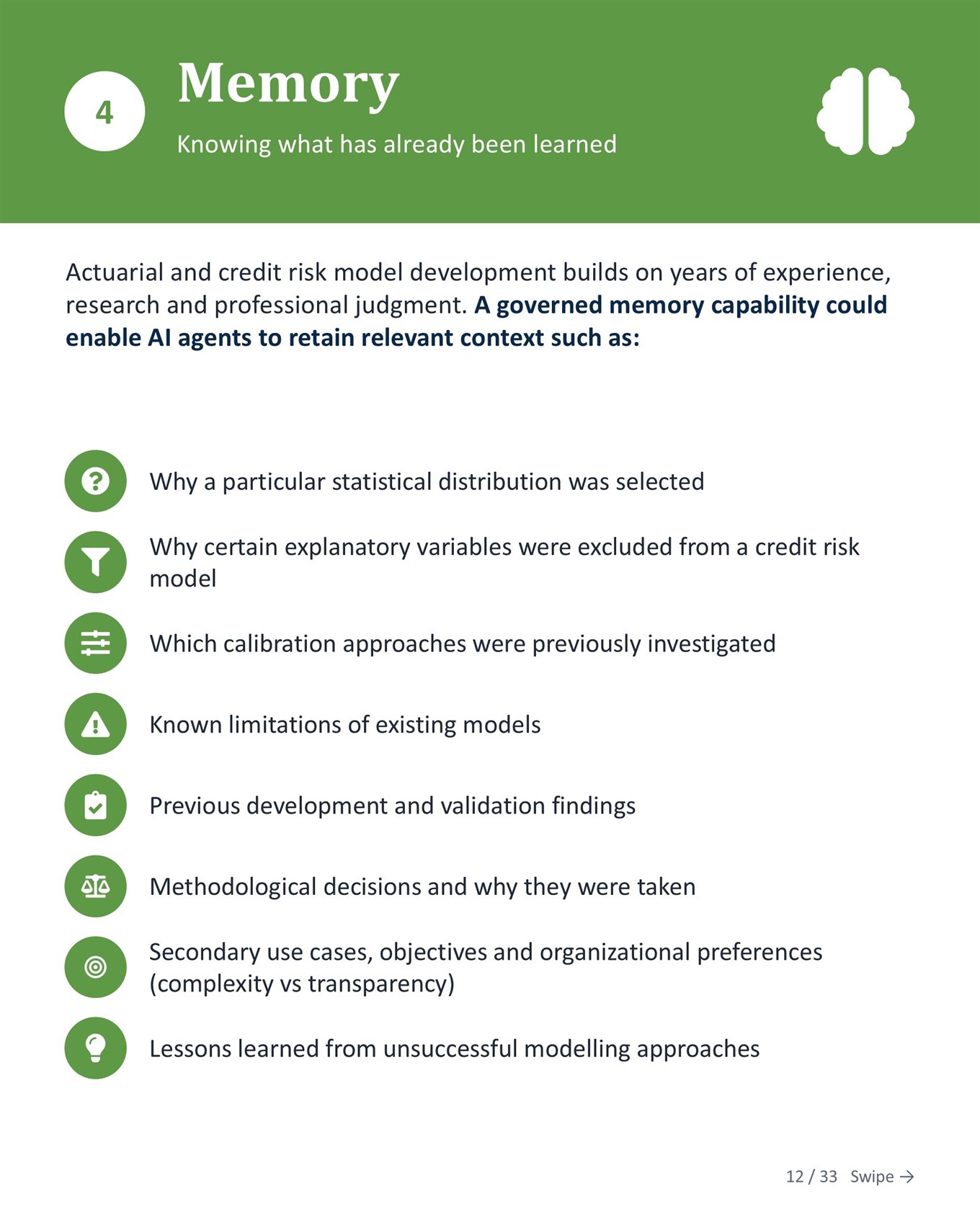
Memory: retaining relevant context, decisions, limitations and lessons learned.
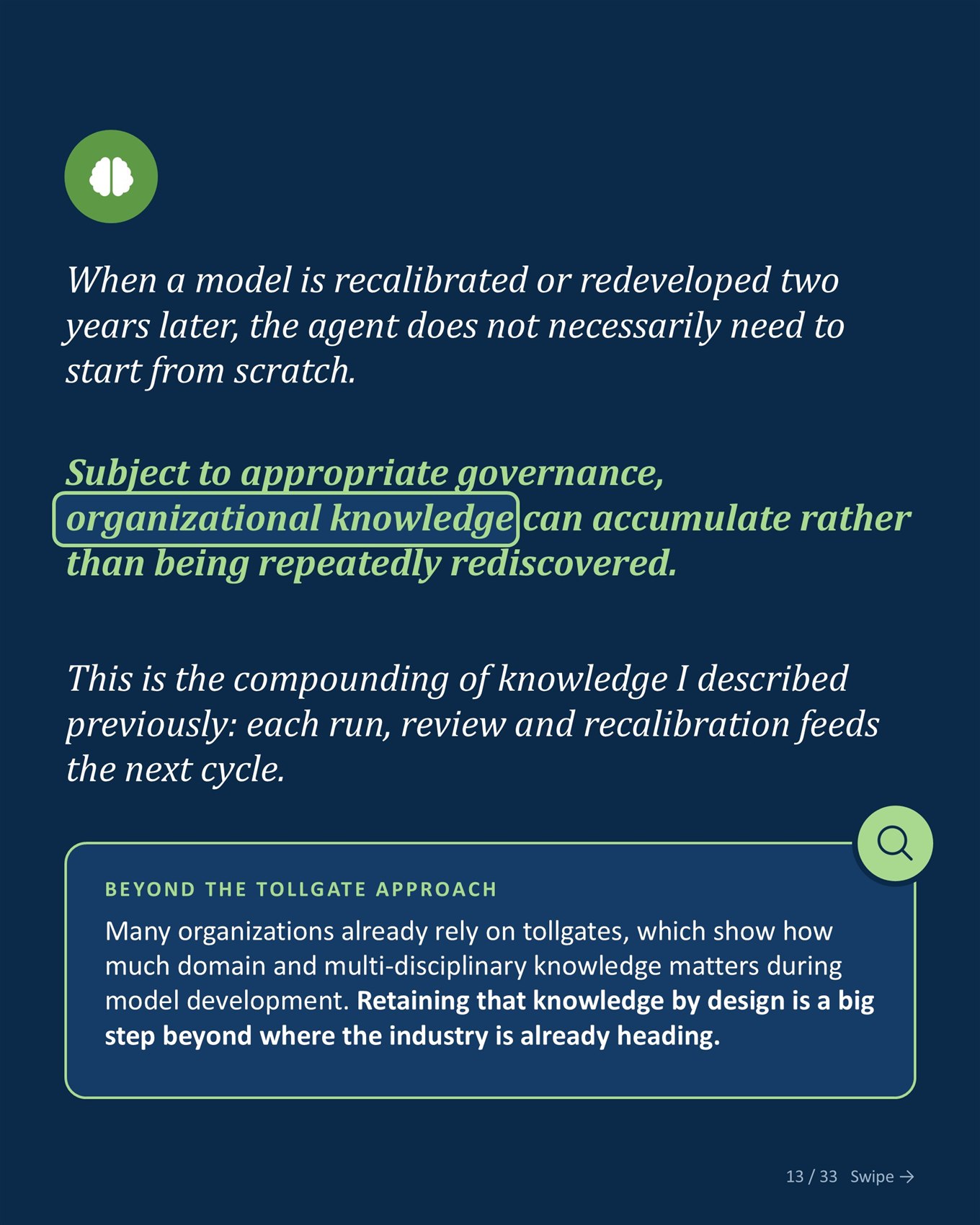
Organizational knowledge compounds as every run, review and recalibration informs the next, beyond the tollgate approach.
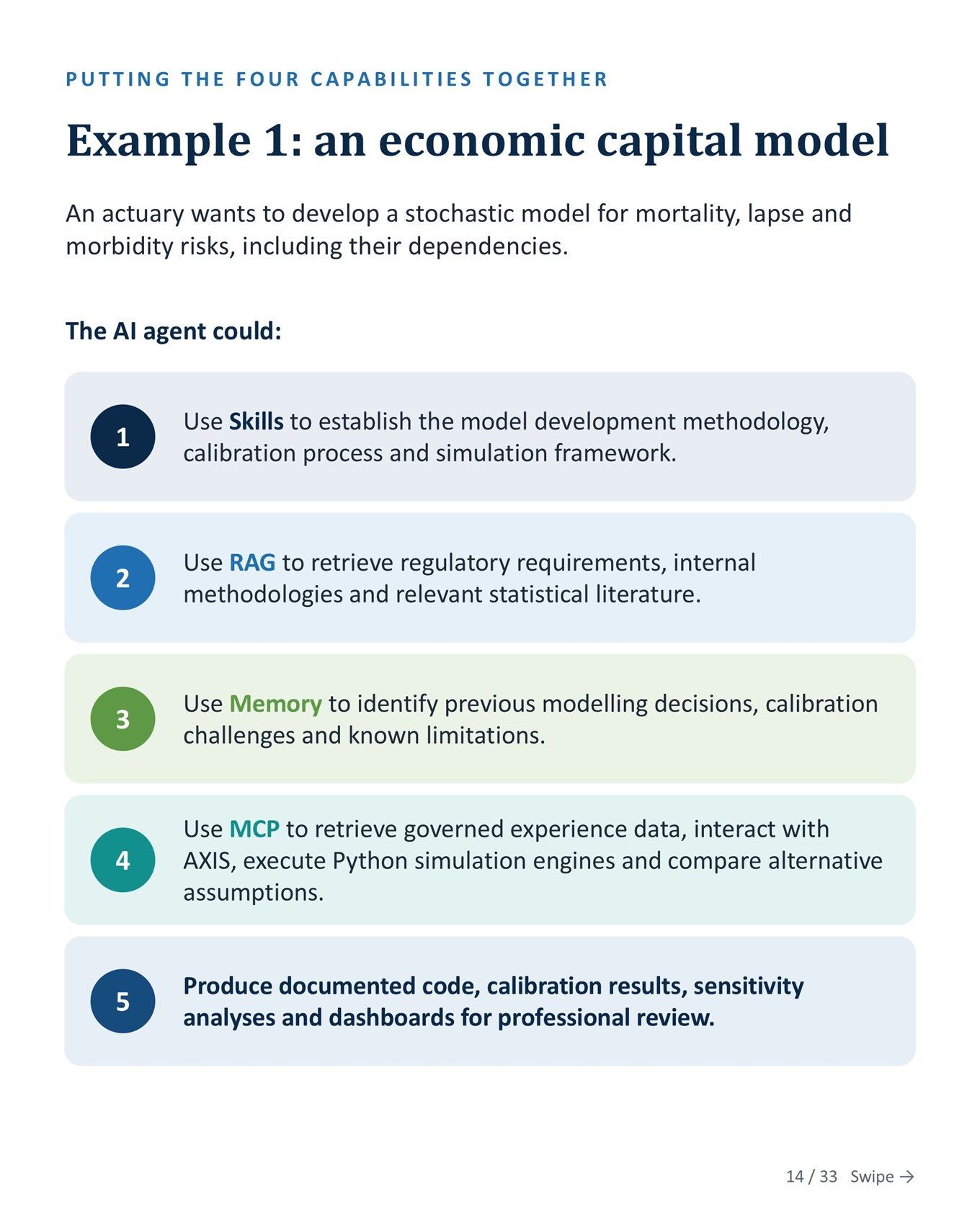
Example: developing an actuarial economic capital model with AI agent support.
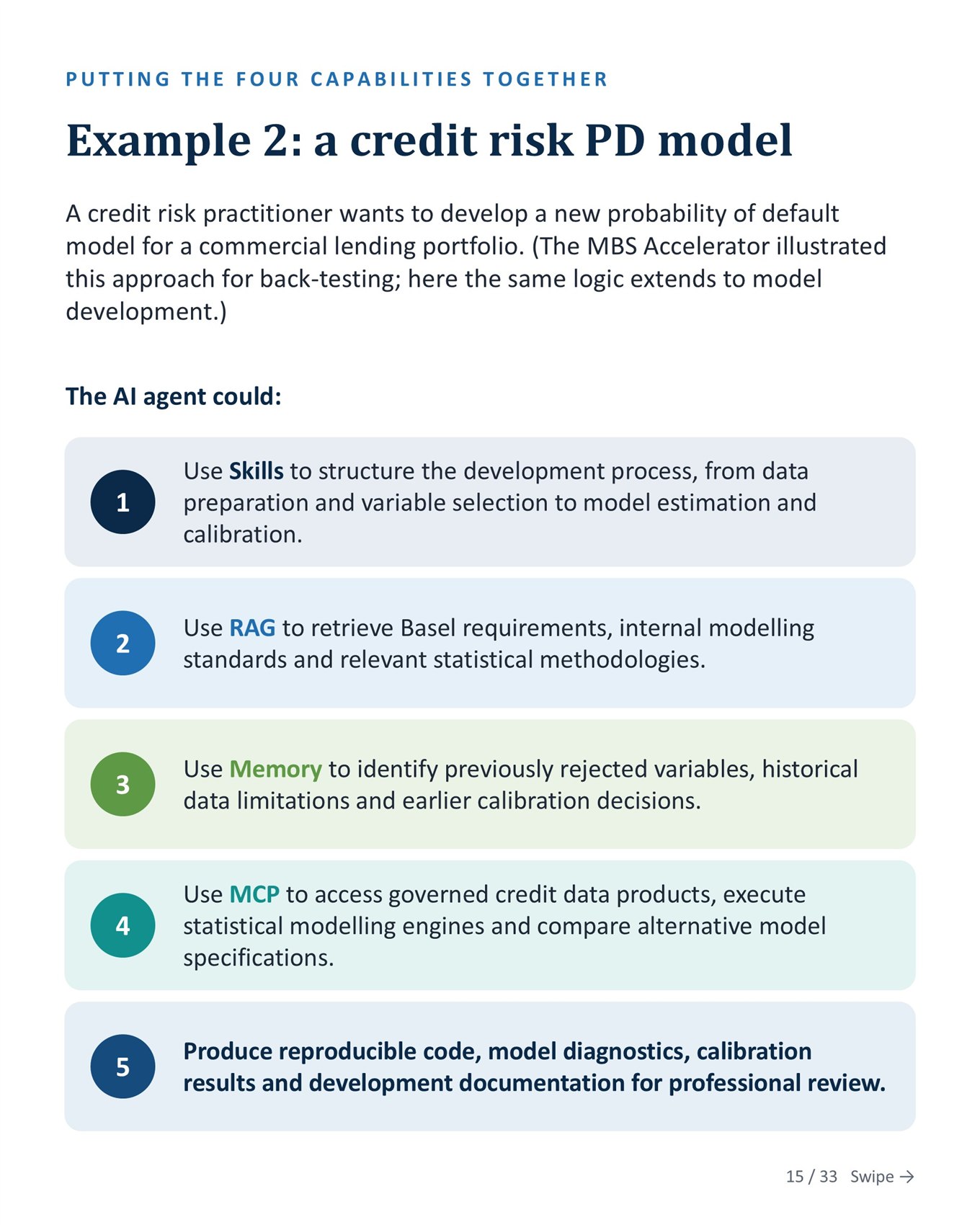
Example: developing a credit risk probability of default model with AI agent support.
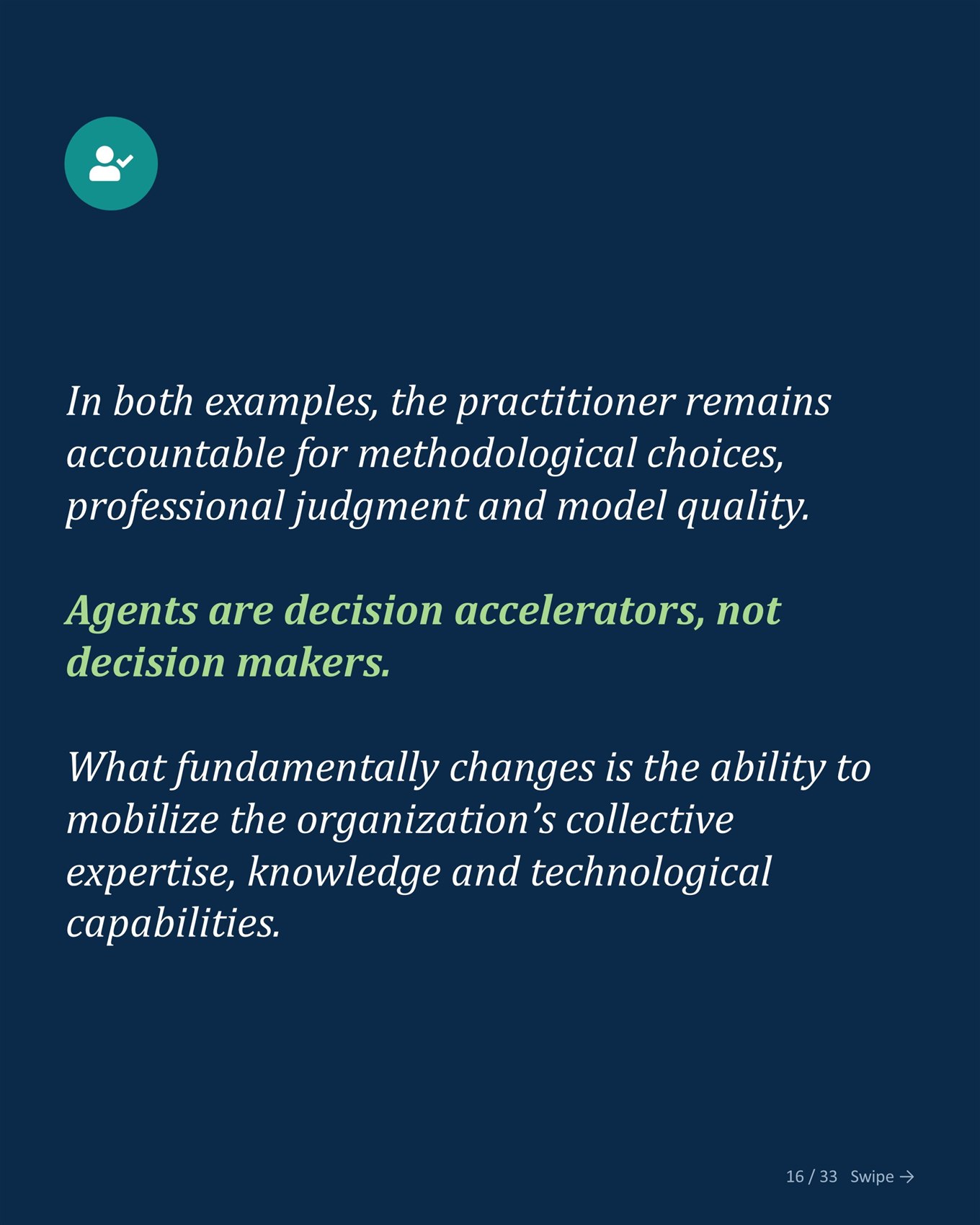
The practitioner remains accountable; agents accelerate decisions rather than make them.
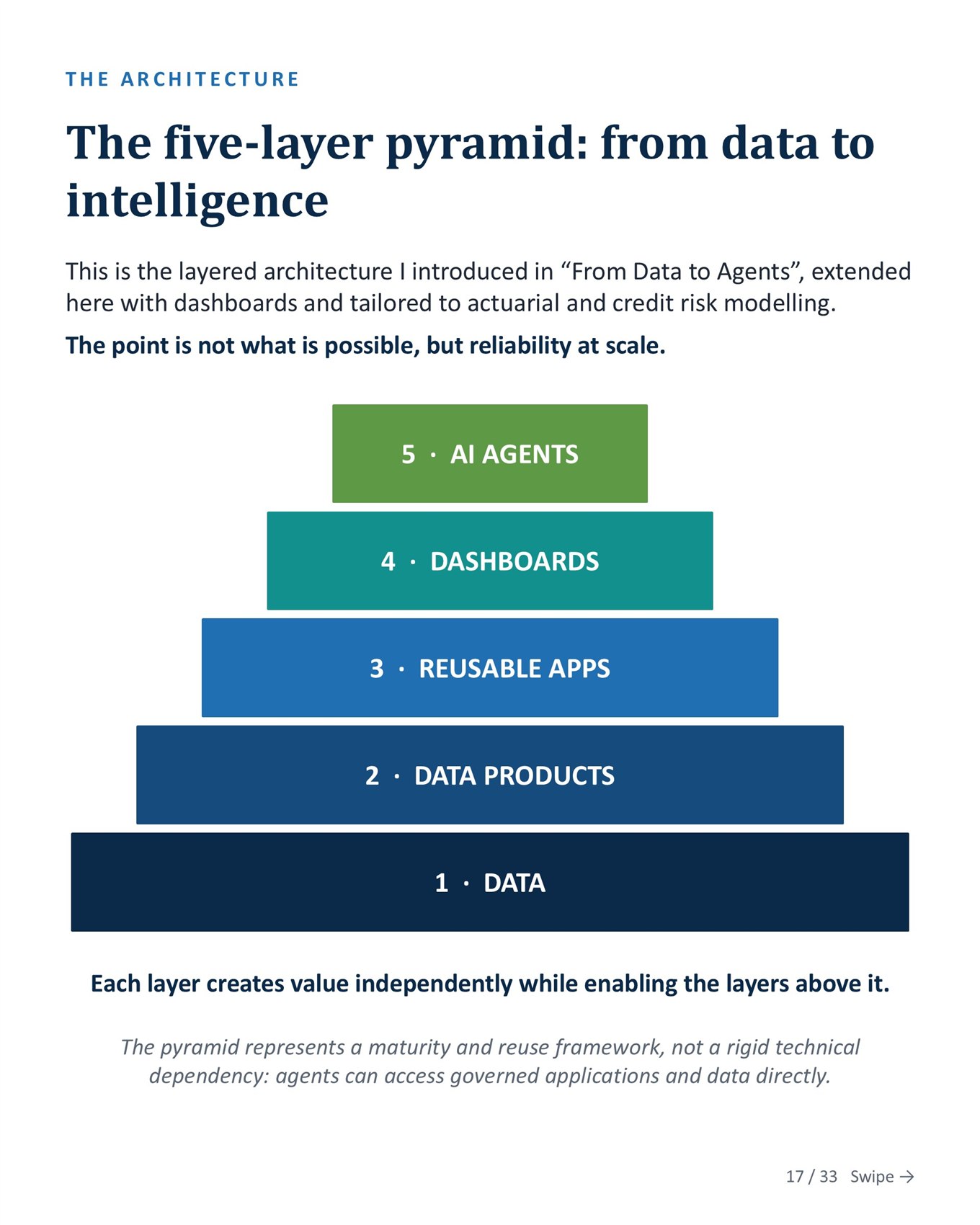
A five-layer pyramid showing Data, Data Products, Reusable Applications, Dashboards and AI Agents.
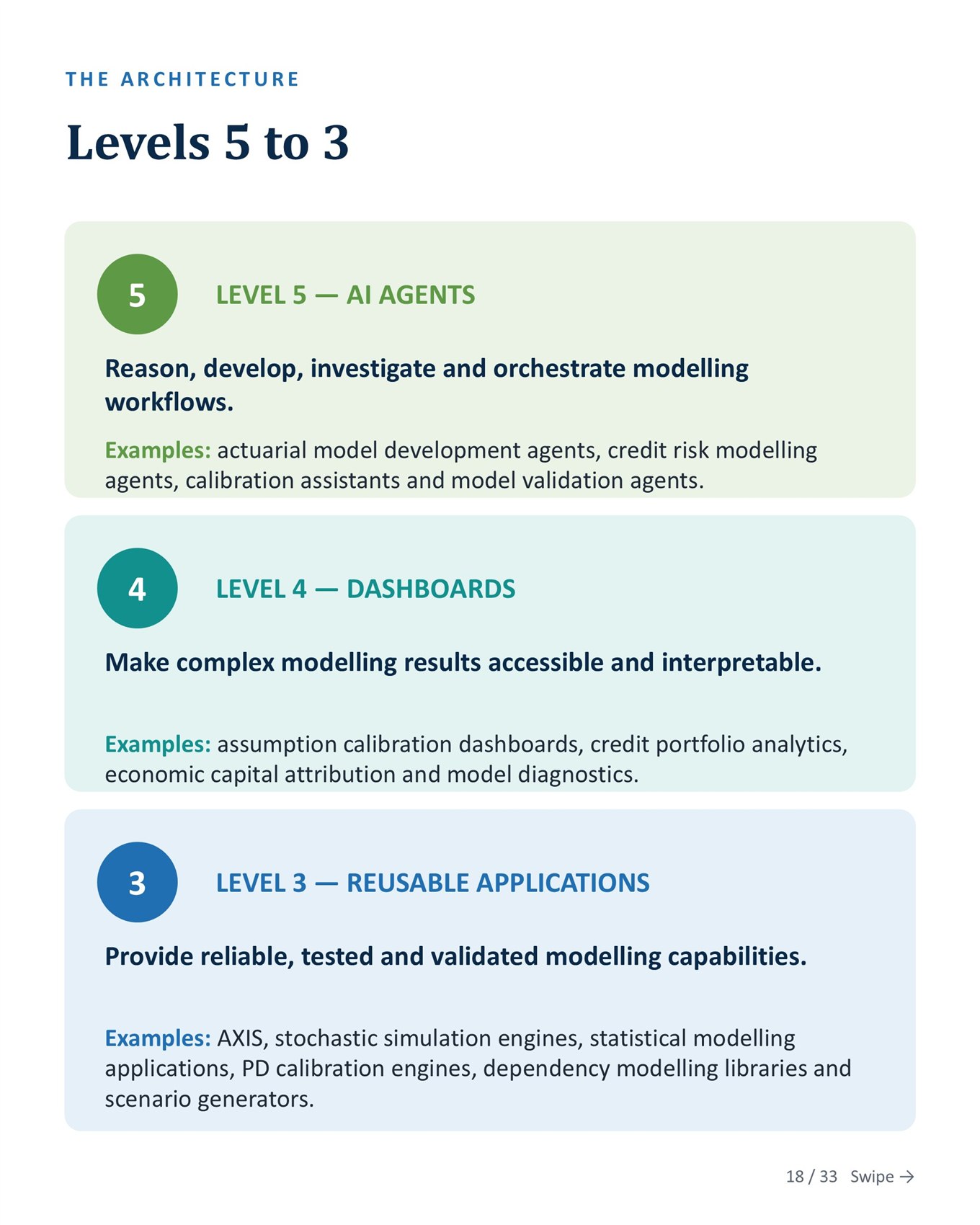
Pyramid levels five to three: AI Agents, Dashboards and Reusable Applications.
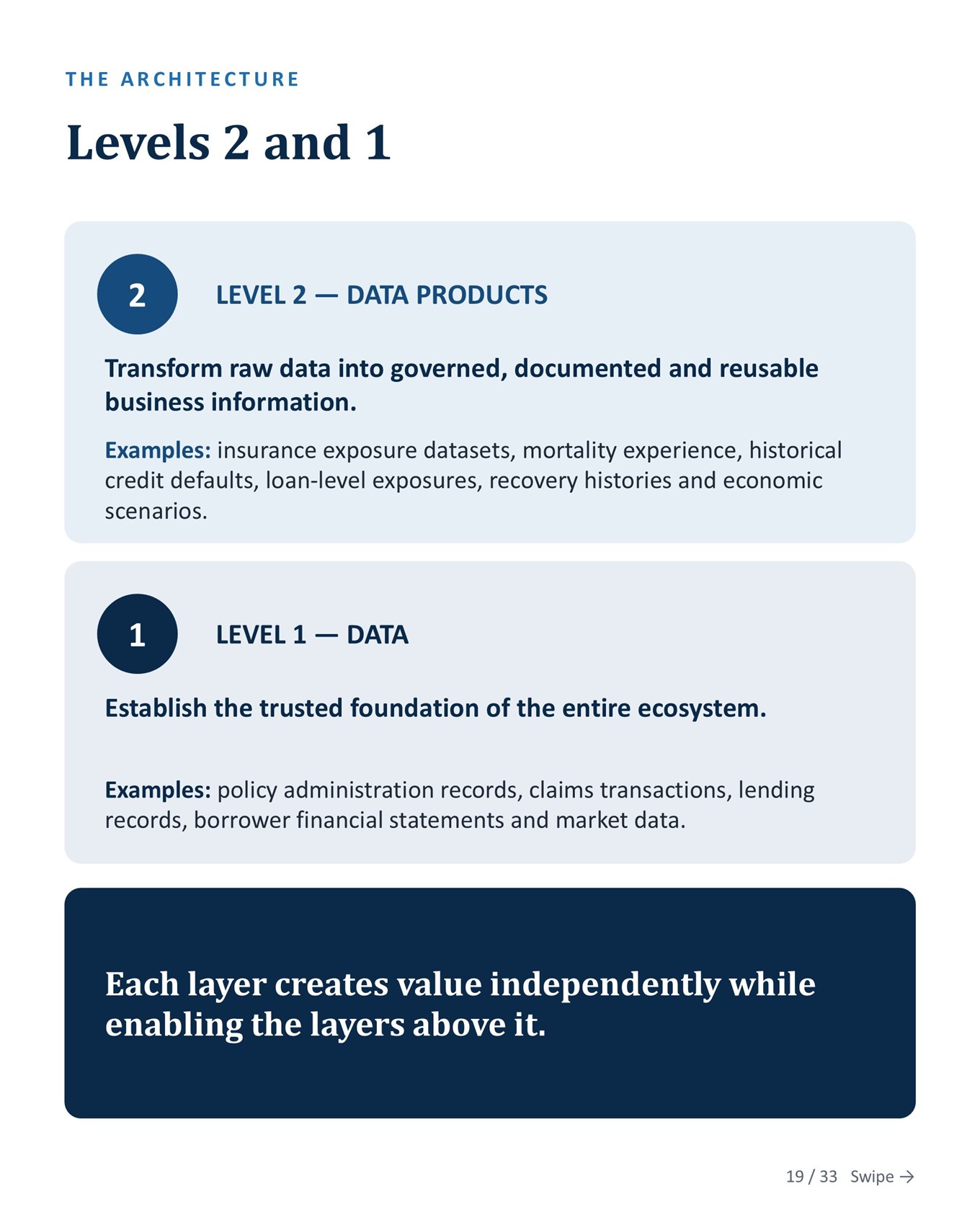
Pyramid levels two and one: Data Products and trusted Data foundations.
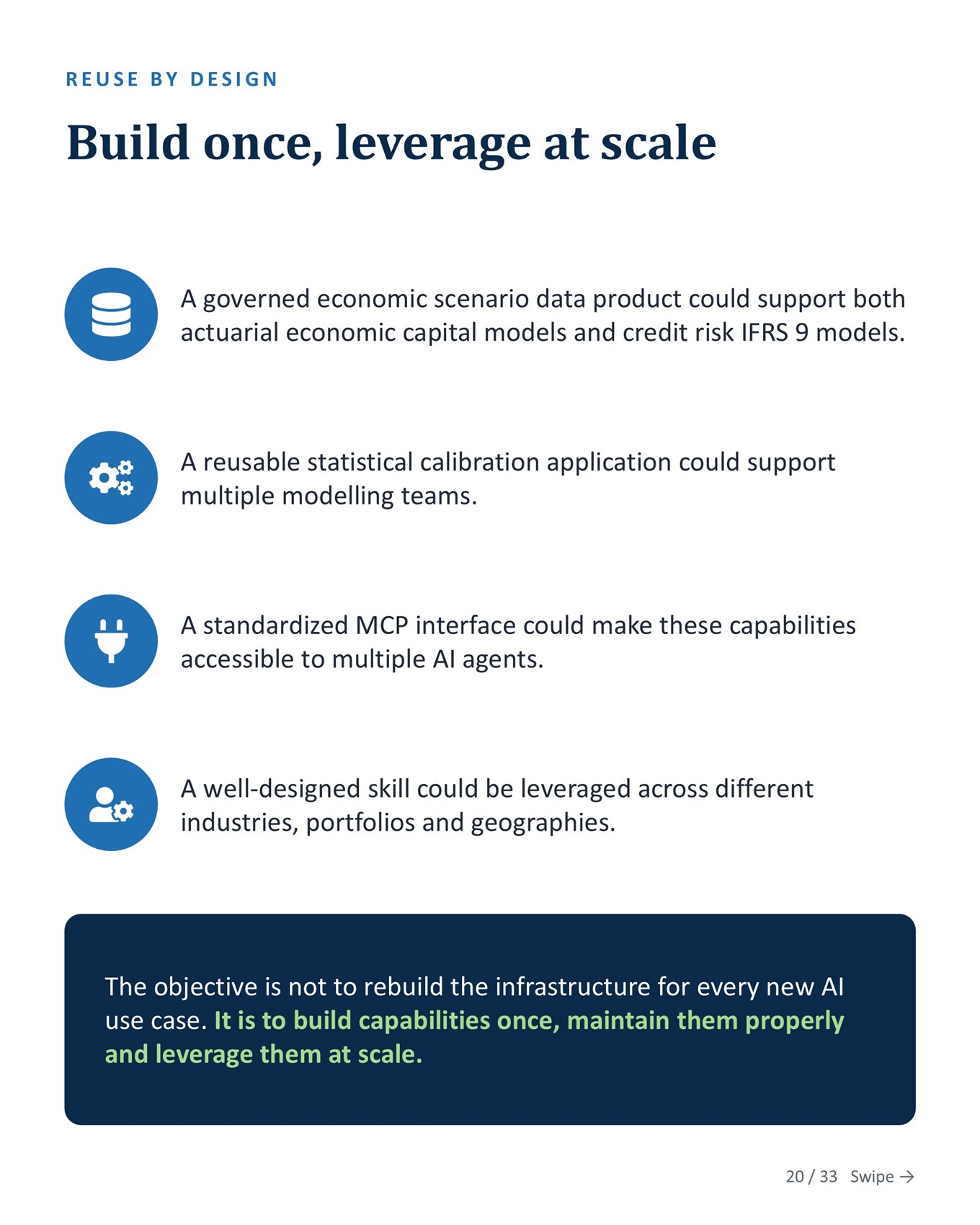
Reuse by design: build governed capabilities once and leverage them at scale.
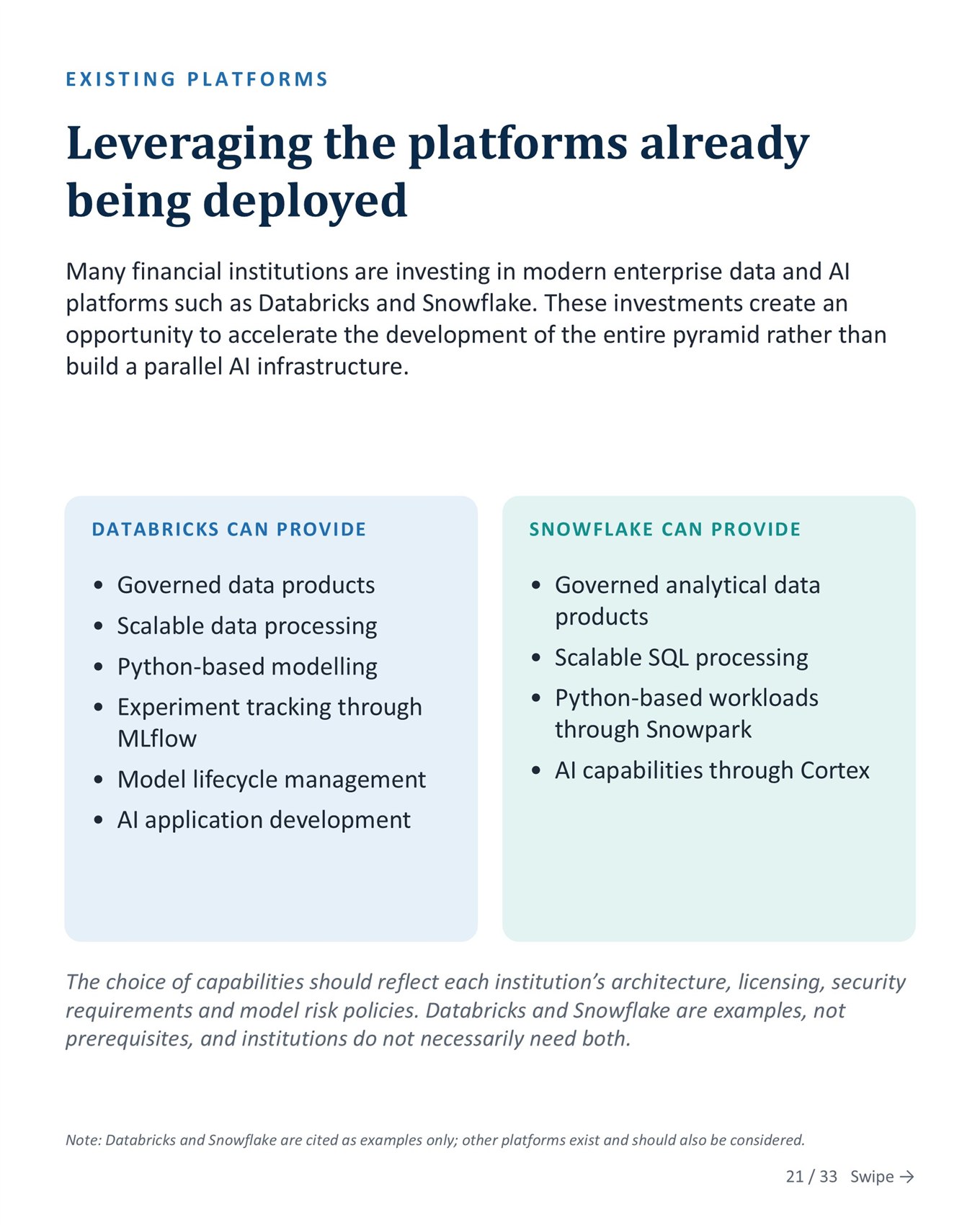
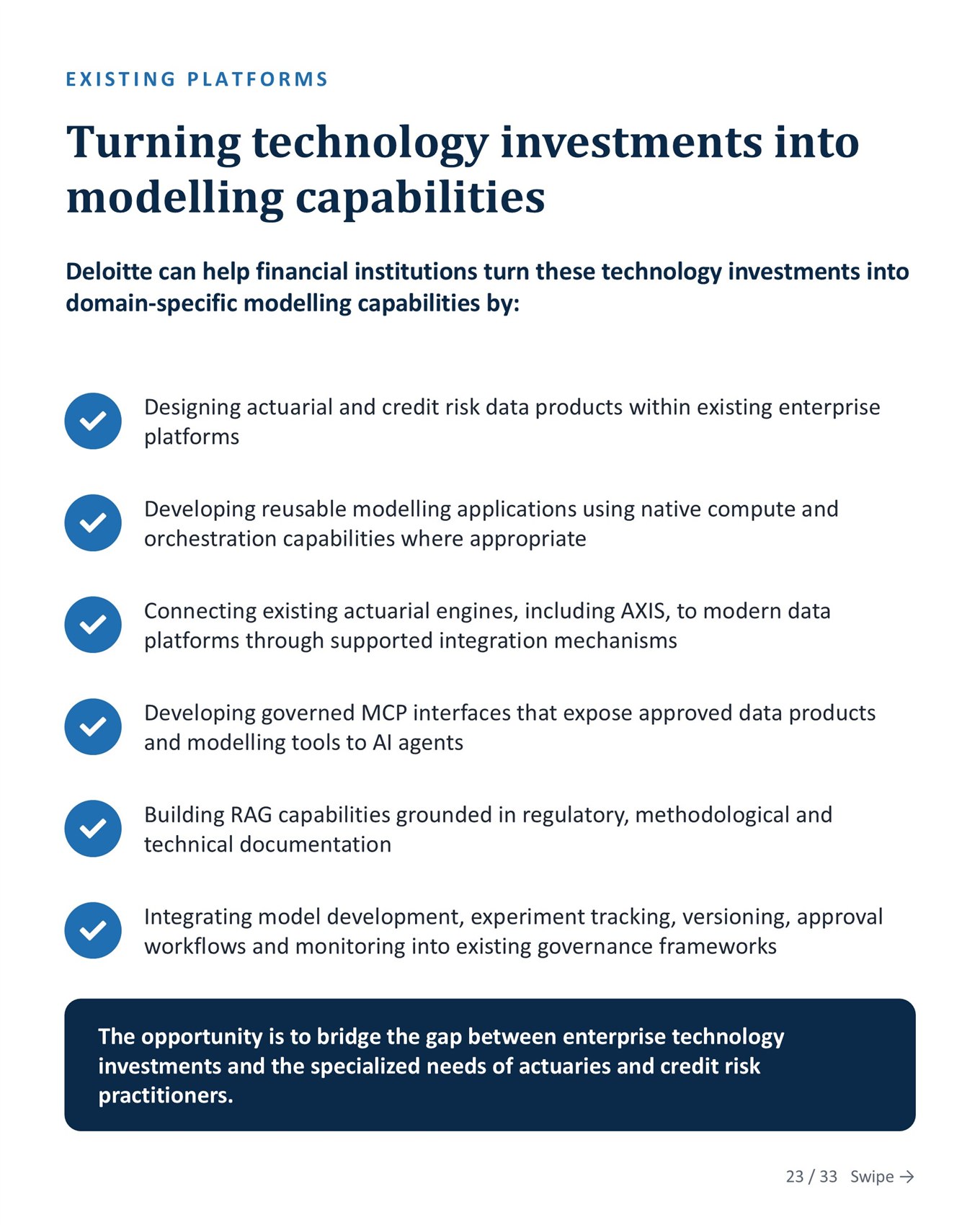
Using existing enterprise platforms such as Databricks and Snowflake to accelerate the ecosystem.
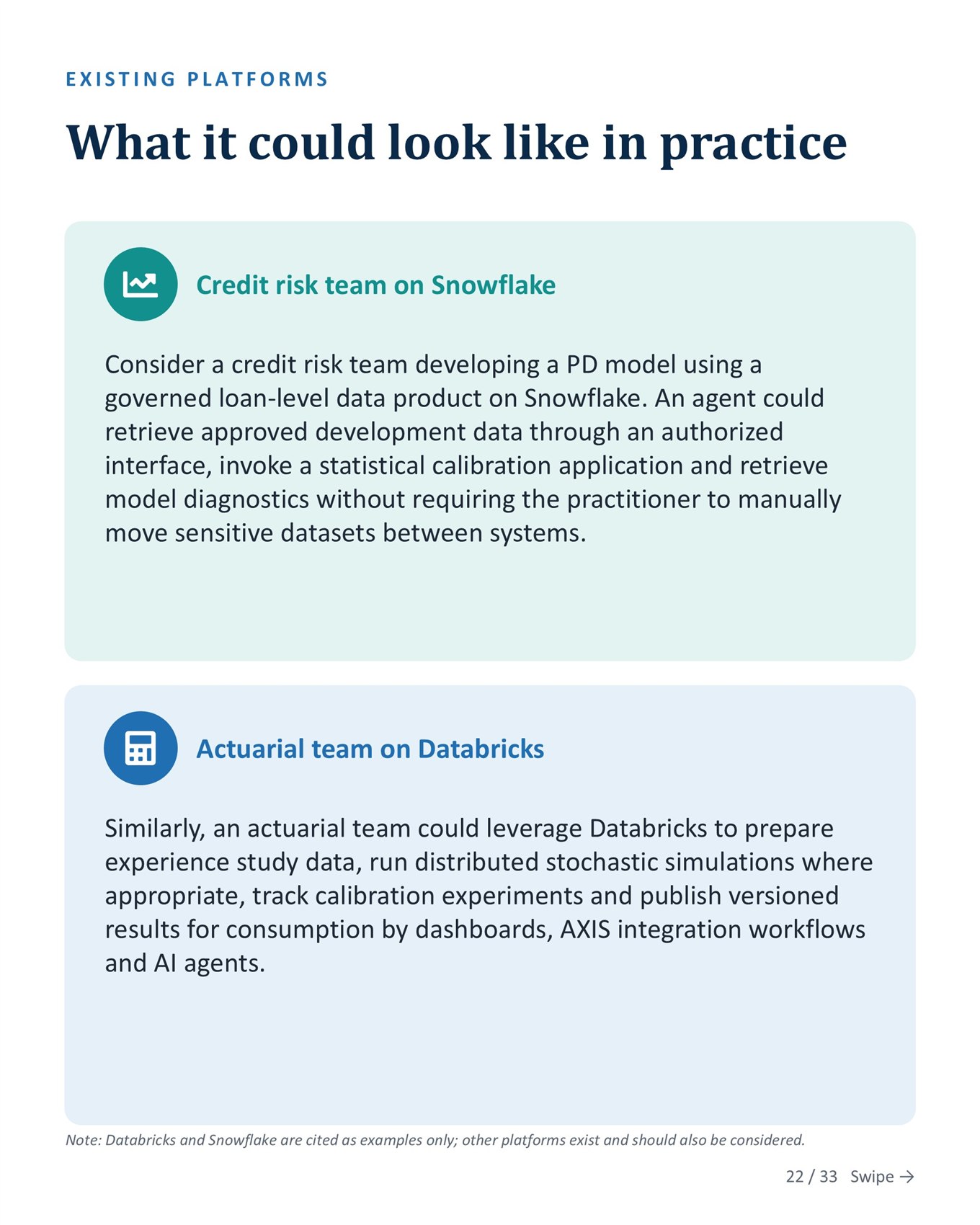
A credit risk team uses governed data and modelling capabilities on Snowflake.
Ways to turn technology investments into domain-specific modelling capabilities.
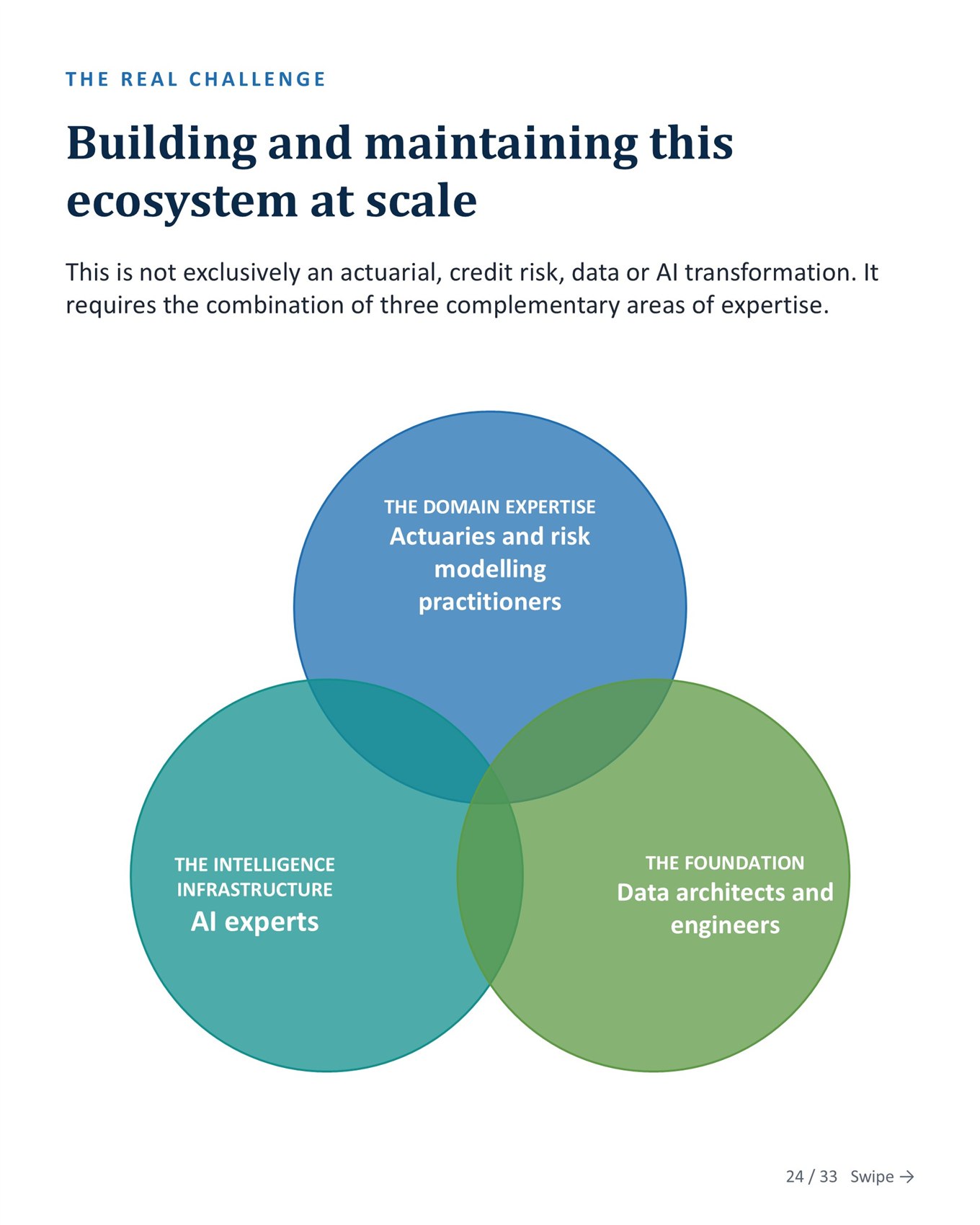
Building and maintaining the ecosystem requires three complementary areas of expertise.
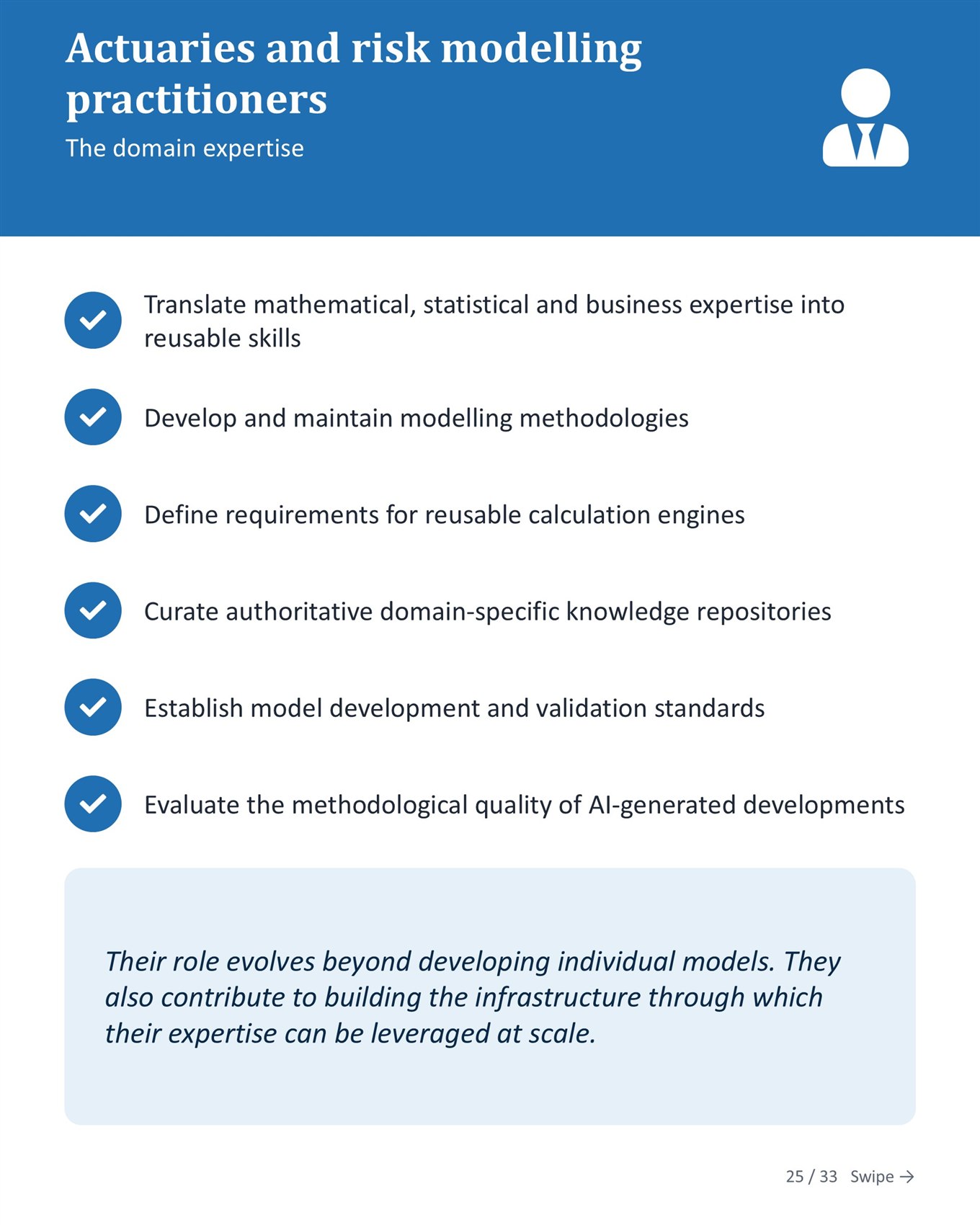
Actuarial and risk modelling practitioners contribute the domain expertise.
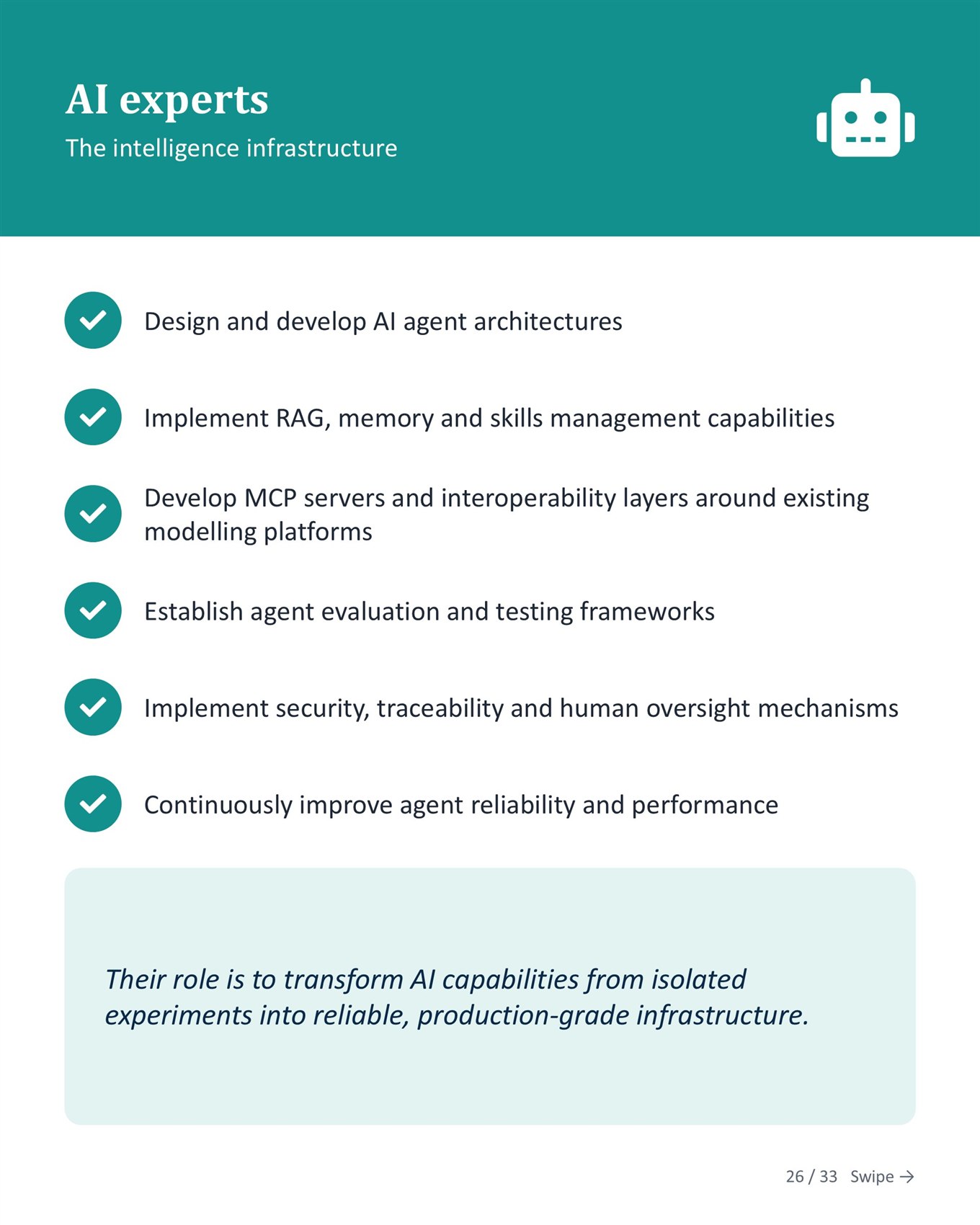
AI experts design the intelligence infrastructure, including agents, RAG, memory and evaluation.
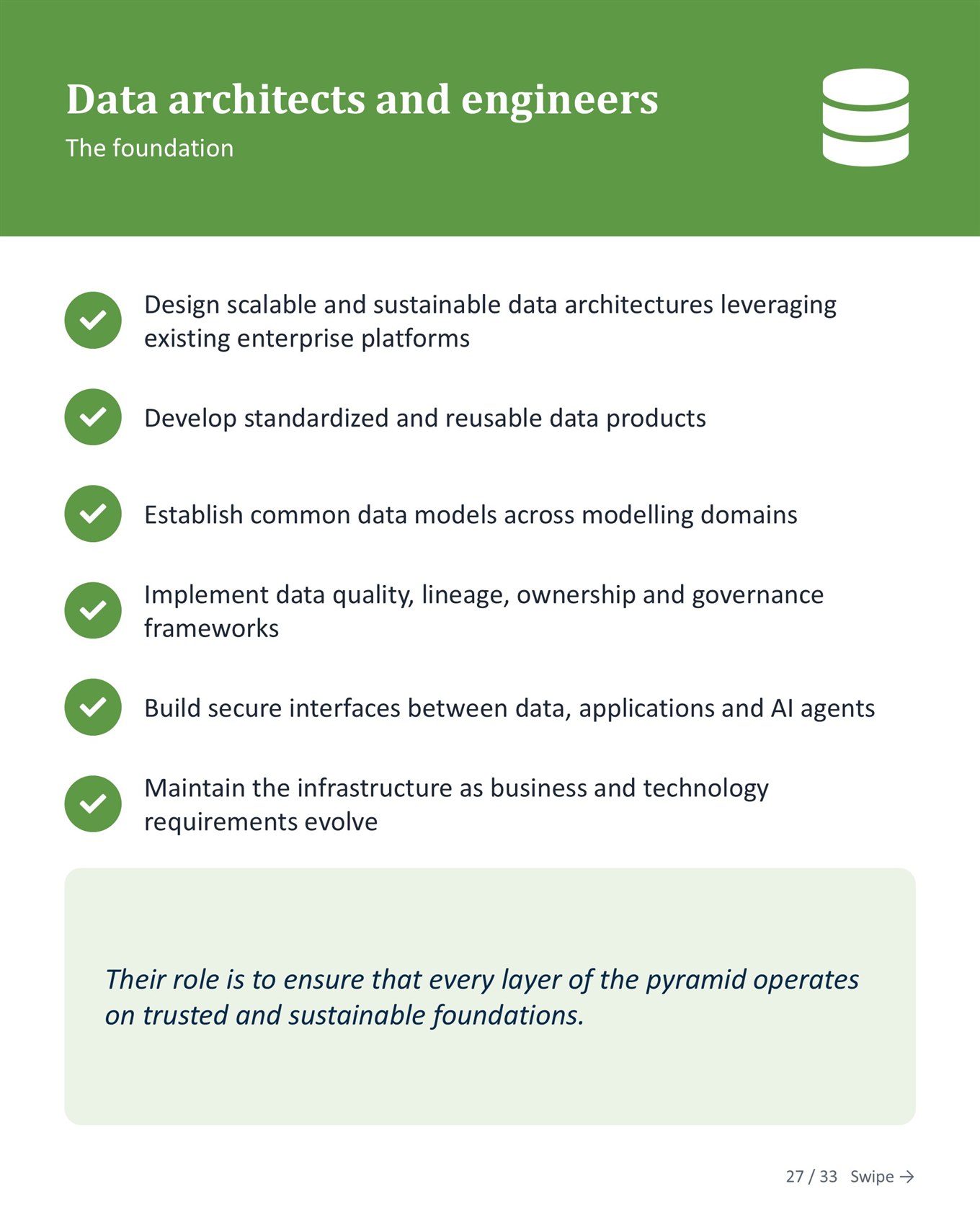
Data architects and engineers provide the trusted foundation for the ecosystem.
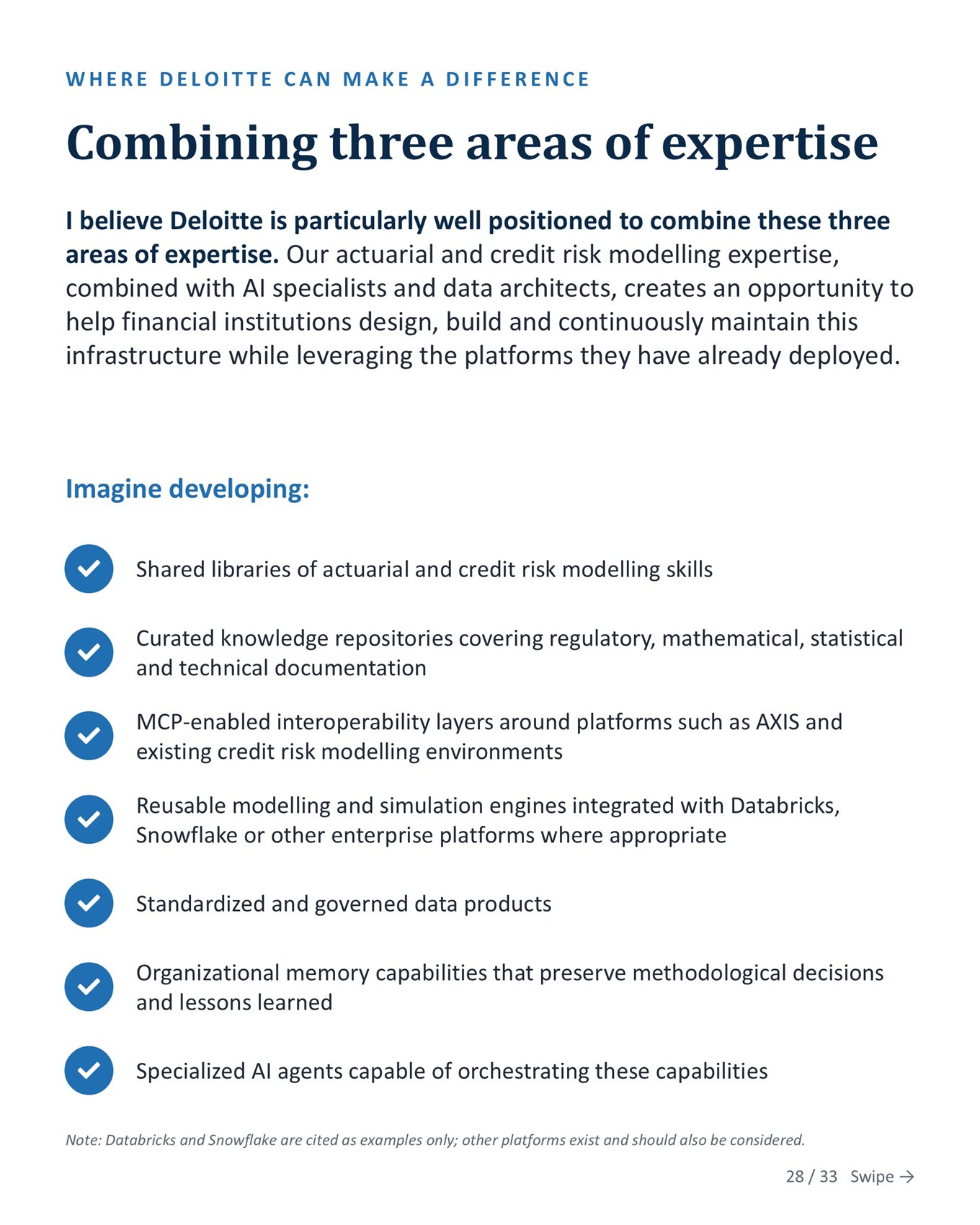
Combining actuarial and credit risk modelling expertise with AI and data architecture.
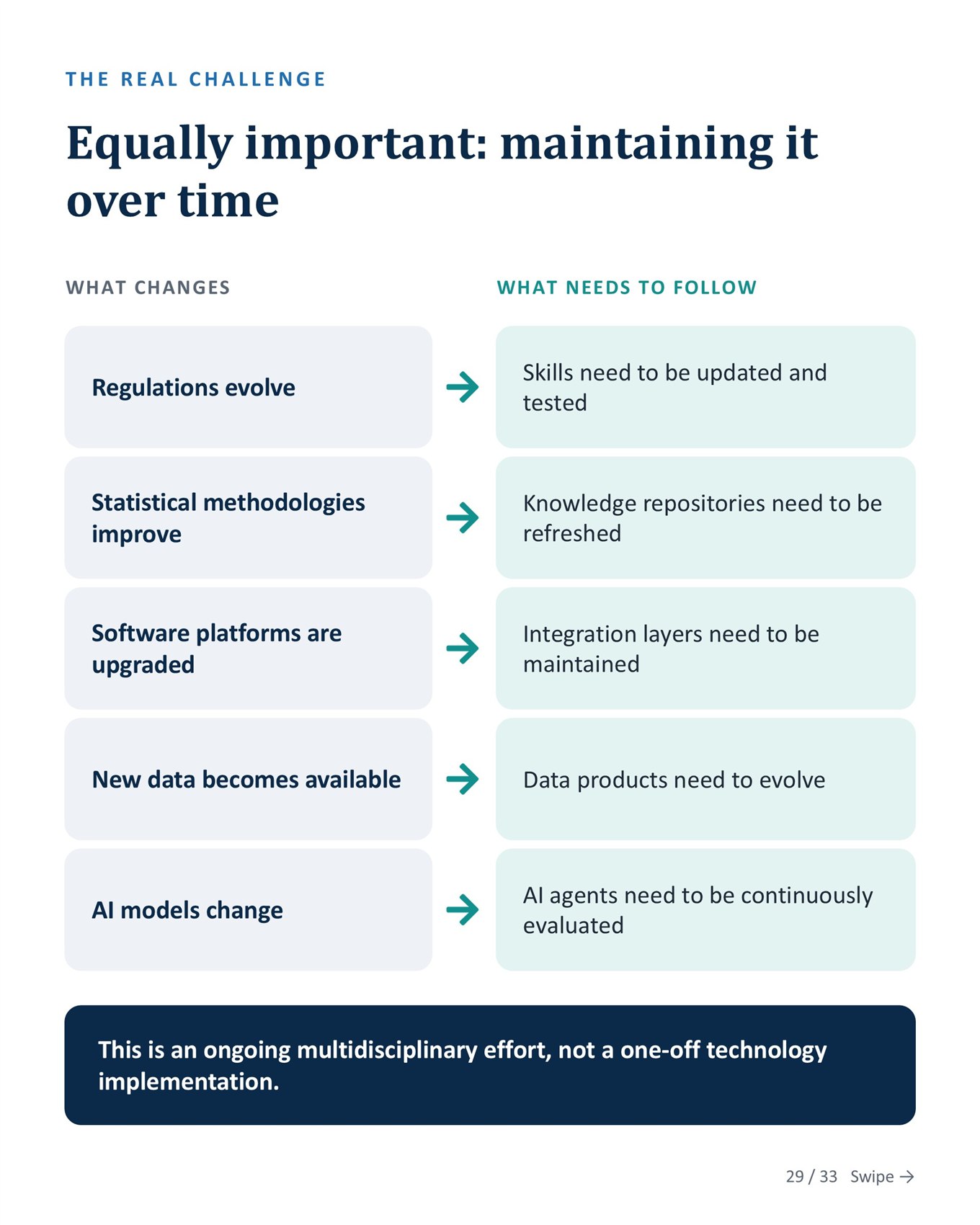
The ecosystem needs ongoing maintenance as regulations, methodologies, platforms and data change.
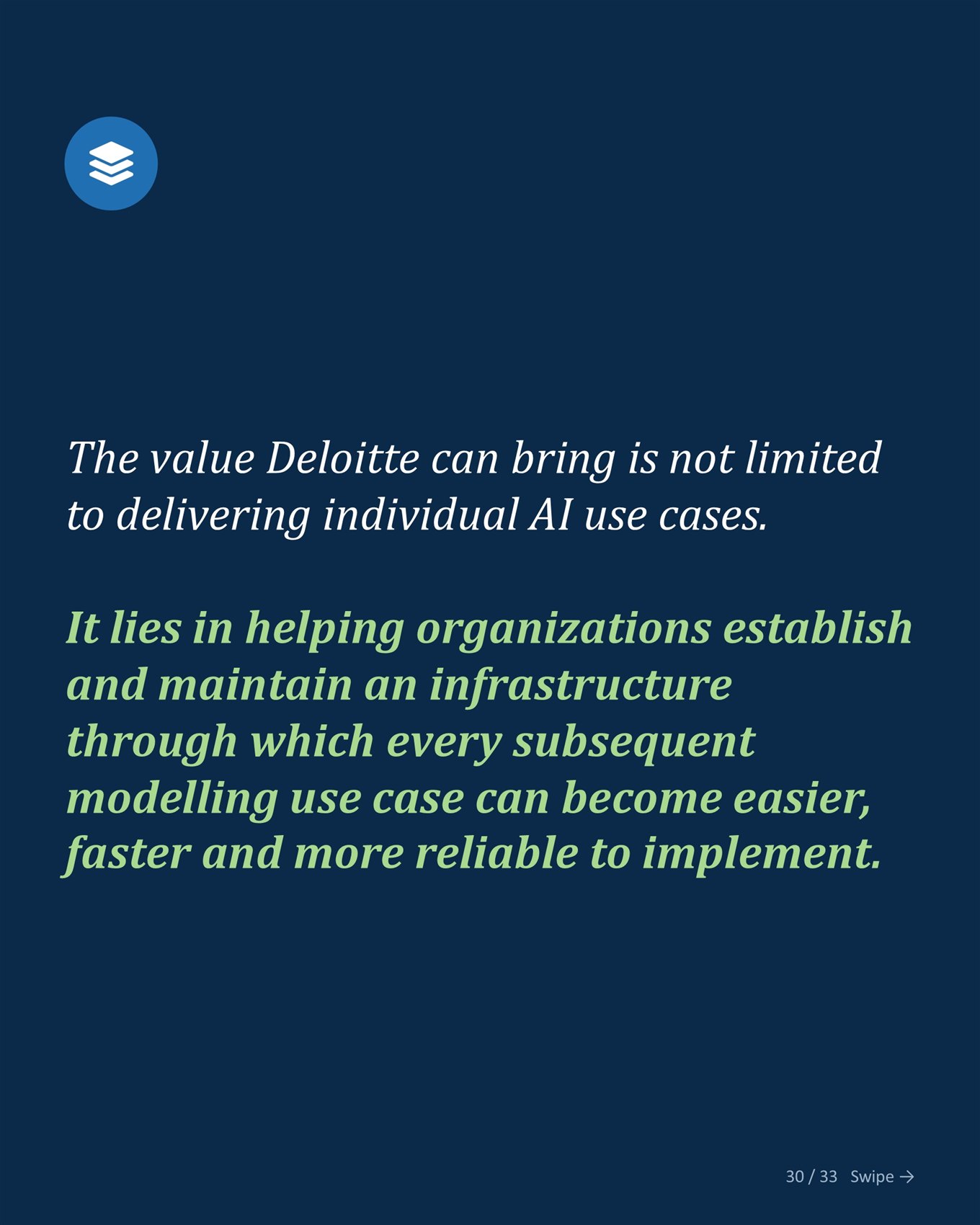
A maintained infrastructure makes every subsequent modelling use case easier, faster and more reliable.
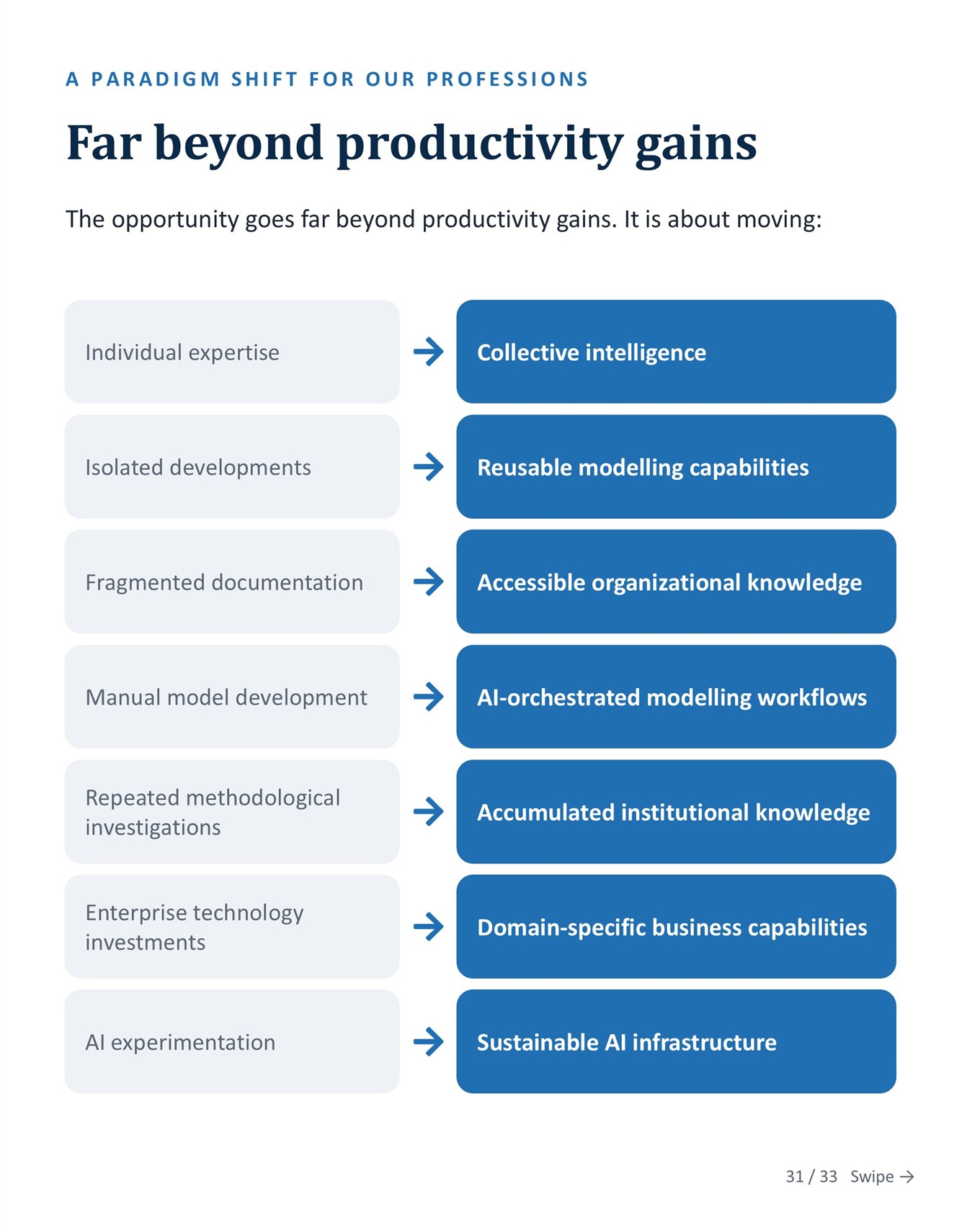
A paradigm shift from isolated developments toward reusable capabilities and accumulated knowledge.
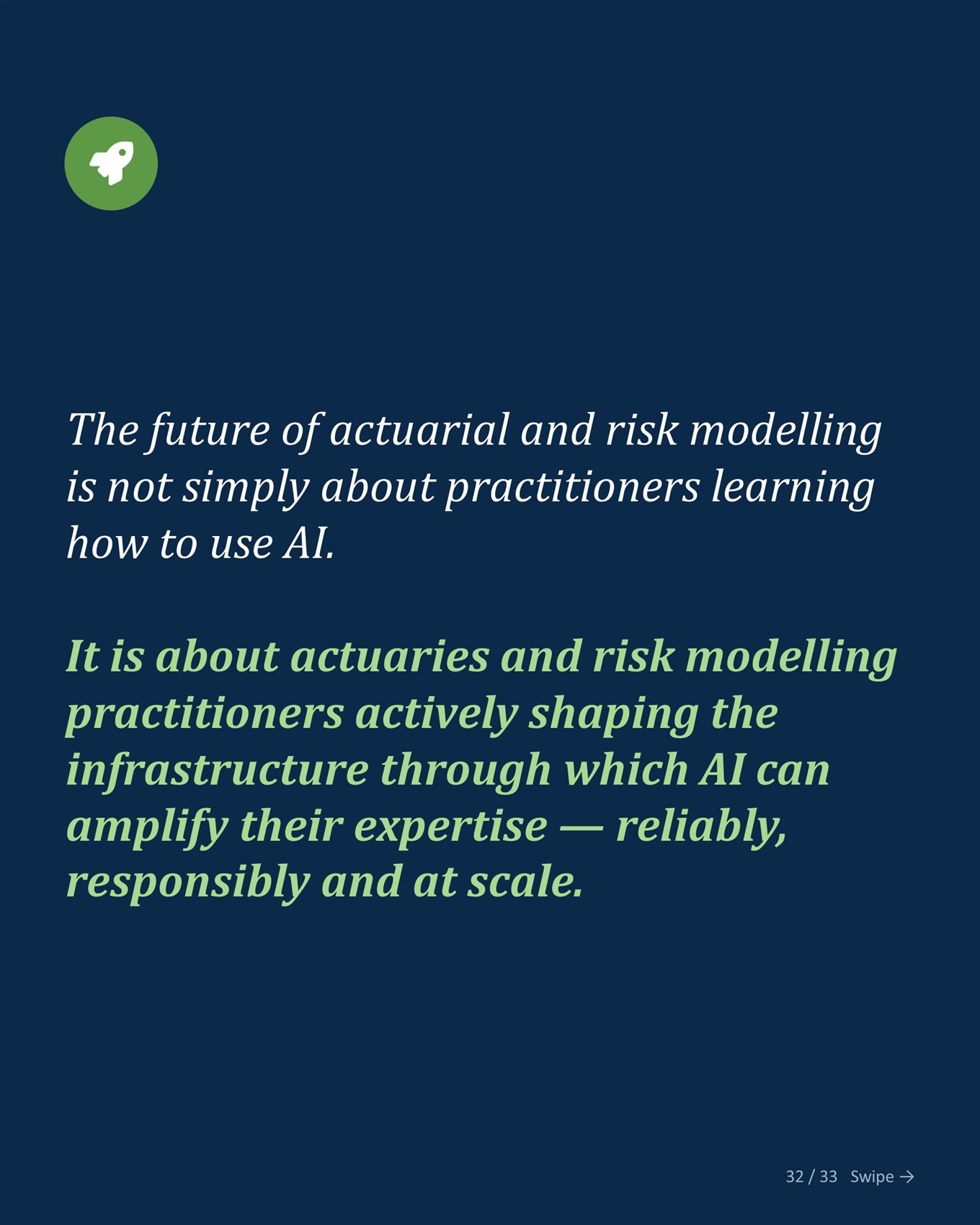
Practitioners can shape infrastructure that amplifies their expertise reliably and responsibly.
The AI advantage comes from institutionalizing knowledge better, not simply adopting tools faster.
Use and keys to navigate